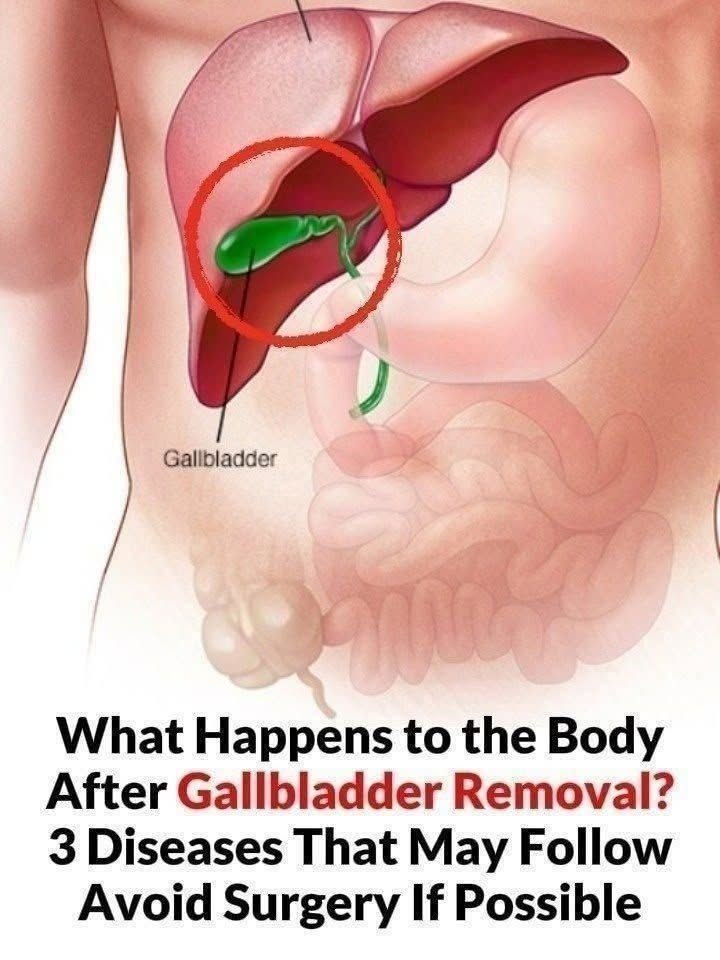
If you’re asking about the claim in that title, it’s important to separate common facts from fear-based claims.
Gallbladder removal (cholecystectomy) is a very common surgery, and for many people it is the recommended treatment for problems such as repeated gallstone attacks, gallbladder inflammation, or certain complications. It is generally considered safe, and many people live normally without a gallbladder.
That said, after gallbladder removal, some people can develop changes or complications, including:
- Post-cholecystectomy digestive symptoms
- Some people experience diarrhea, bloating, gas, nausea, or discomfort after eating—especially fatty foods.
- This often improves over time and can sometimes be managed with diet changes or medication.
- Bile-related issues
- Without a gallbladder storing bile, bile flows continuously into the intestine.
- In some people, excess bile reaching the colon can contribute to bile acid diarrhea.
- Bile duct or surgical complications (less common)
- Rarely, problems such as bile duct injury, retained stones, infection, or bile leaks can occur.
Whether surgery should be avoided depends on why it is being considered. Avoiding surgery may be reasonable in some cases (for example, mild symptoms where risks and benefits are carefully weighed), but delaying necessary surgery can also carry risks, such as recurrent inflammation, infection, pancreatitis, or blocked bile ducts.
If you have been advised to remove your gallbladder, the key questions are:
- What is the exact diagnosis (stones, inflammation, polyps, infection, etc.)?
- Are symptoms recurring or causing complications?
- What are the risks of waiting in your specific case?
- Are there alternatives?
If you share why gallbladder removal was recommended (symptoms, ultrasound findings, age, and any complications), I can help you understand the pros and cons more specifically.
