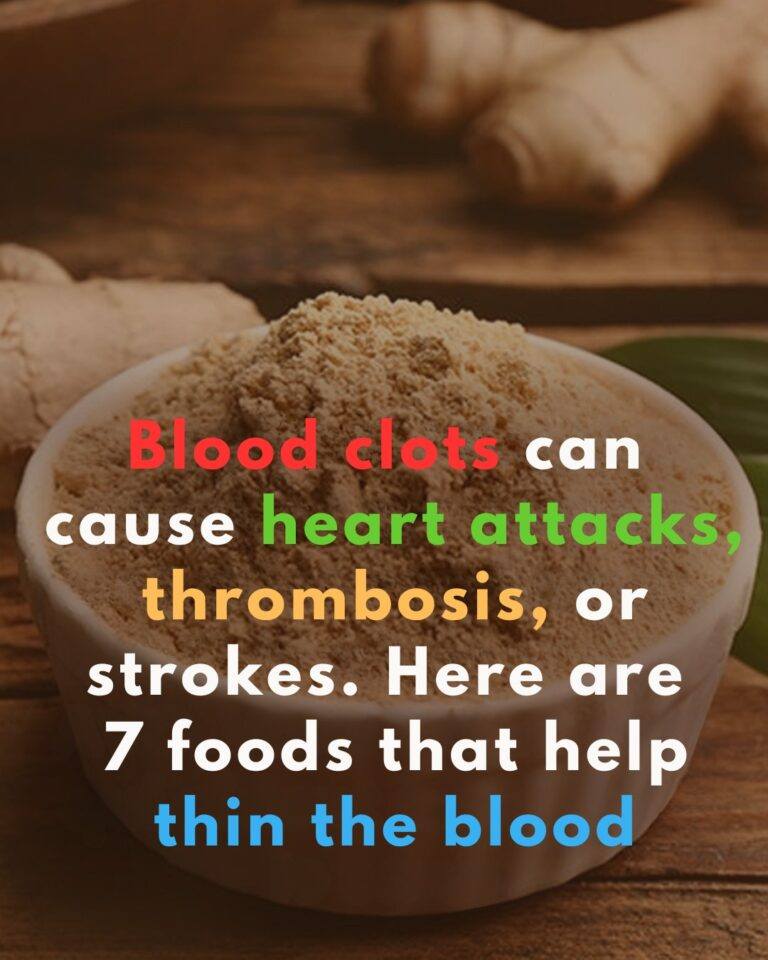
That kind of headline is partly based on real science, but usually exaggerated.
🩸 First, important clarification
- Blood clots can contribute to heart attack, stroke, and thrombosis
- But food does NOT “thin your blood” in a strong or immediate medical way
- Only certain medications (like anticoagulants) can truly “thin” blood in a controlled, clinical sense
So foods are more about supporting healthy circulation, not preventing serious clots on their own.
🥗 Foods often linked with “better blood flow”
Here are 7 foods commonly mentioned in this context, with what they actually do:
1. 🧄 Garlic
- May slightly reduce platelet “stickiness”
- Supports heart health overall
2. 🧅 Onions
- Contain compounds that may support circulation
3. 🐟 Fatty fish (salmon, sardines)
- Rich in omega-3 fatty acids
- Can reduce inflammation and clotting tendency slightly
4. 🫚 Ginger
- Mild anti-platelet effects in some studies
- Helps circulation and digestion
5. 🫐 Berries
- High in antioxidants (flavonoids)
- Support blood vessel health
6. 🍅 Tomatoes
- Contain lycopene, which supports heart and vessel health
7. 🍵 Green tea
- Contains catechins that may support cardiovascular function
⚠️ Very important safety note
- These foods are not a substitute for anticoagulant medication
- If someone is on blood thinners (like warfarin, aspirin, etc.), they should not suddenly change diet without medical advice
- “Too much thinning” from medication + certain supplements can increase bleeding risk
🧠 Bottom line
These foods help heart and blood vessel health, but they do not directly dissolve clots or replace medical treatment.
If you want, I can break down:
- foods that increase clot risk
- or natural habits that actually reduce stroke risk (more evidence-based)
