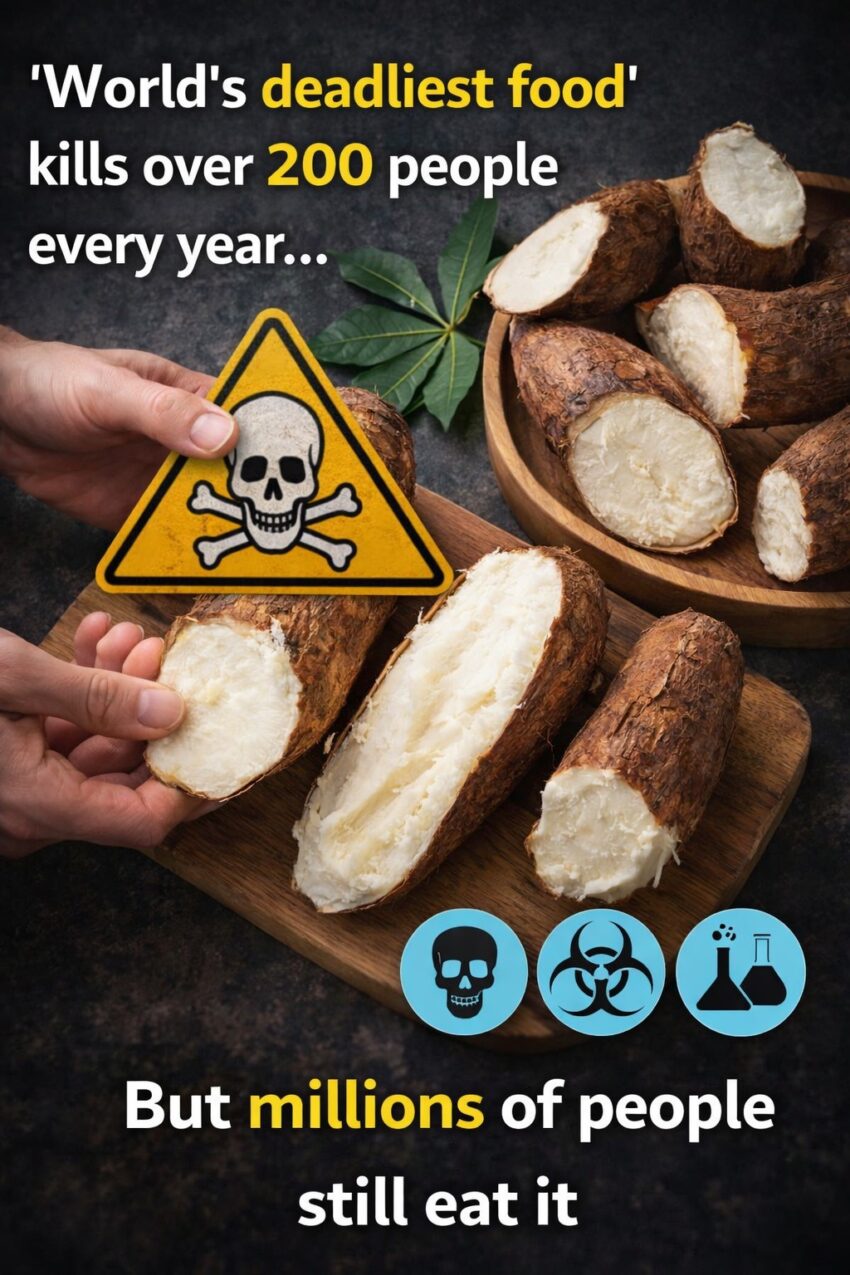
Cassava (also called yuca or manioc) is a starchy root widely eaten in Africa, Asia, and Latin America. It’s a major source of calories for millions of people—but it needs to be handled and cooked properly.
What it offers
- Energy-rich carbs (good for fueling the body)
- Small amounts of vitamin C and minerals
- Naturally gluten-free
Important safety point ⚠️
Raw or improperly prepared cassava contains compounds that can release cyanide. Eating it this way can be dangerous.
How to eat it safely
- Peel thoroughly (the skin has higher toxin levels)
- Soak or ferment (especially for bitter varieties)
- Cook well (boiling, baking, frying all help remove toxins)
- Never eat it raw
Types
- Sweet cassava: lower toxin levels, commonly sold in markets
- Bitter cassava: higher toxins, requires more processing
Possible health concerns
- Poorly processed cassava has been linked to nerve damage conditions like Konzo in extreme cases
- Very high intake with low protein diets may contribute to Goiter due to interference with iodine use
Bottom line
Cassava is safe and nutritious when properly prepared. Problems arise mainly from eating it raw or relying on it too heavily without a balanced diet.
If you want, I can show you simple, safe ways to cook cassava at home.
