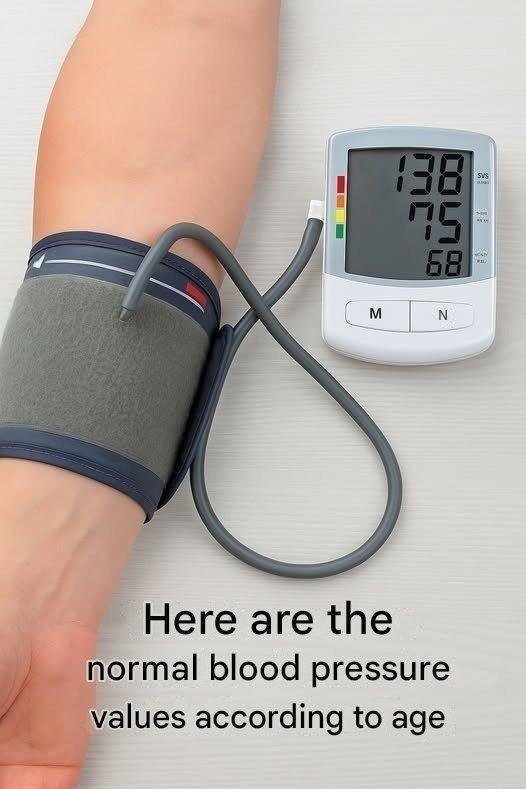
Here’s a clear and medically accurate overview of normal blood pressure values by age group.
🫀 Understanding Blood Pressure
Blood pressure is written as:
Systolic / Diastolic (mmHg)
- Systolic (top number): Pressure when the heart beats
- Diastolic (bottom number): Pressure when the heart rests
Example: 120/80 mmHg
👶 Children (Values Vary by Height & Sex)
| Age | Approximate Normal BP |
|---|---|
| Newborn | 60–90 / 20–60 |
| 1–12 months | 80–100 / 50–65 |
| 1–3 years | 90–105 / 55–70 |
| 4–5 years | 95–110 / 60–75 |
| 6–12 years | 100–120 / 60–75 |
⚠️ In children, doctors use percentile charts based on age, sex, and height.
👦 Teenagers (13–17 years)
Generally similar to adults:
Normal: Below 120/80
👨 Adults (18–59 years)
| Category | Systolic | Diastolic |
|---|---|---|
| Normal | <120 | <80 |
| Elevated | 120–129 | <80 |
| High BP (Stage 1) | 130–139 | 80–89 |
| High BP (Stage 2) | ≥140 | ≥90 |
| Hypertensive Crisis | ≥180 | ≥120 (emergency) |
👴 Older Adults (60+ years)
- Many guidelines aim for below 130/80 if tolerated.
- In some older or frail adults, a systolic under 140 may be acceptable depending on health status.
Targets are individualized by a healthcare provider.
🧪 Tips for Accurate Measurement
- Sit quietly for 5 minutes before measuring
- Keep feet flat on the floor
- Arm at heart level
- Avoid caffeine 30 minutes before
⚠️ Important
Blood pressure normally fluctuates during the day. Diagnosis requires multiple readings, not just one.
If you’d like, I can also provide:
- A simple printable BP reference chart
- Or guidance on what your specific numbers might mean
Just share your reading if you’d like help interpreting it.
