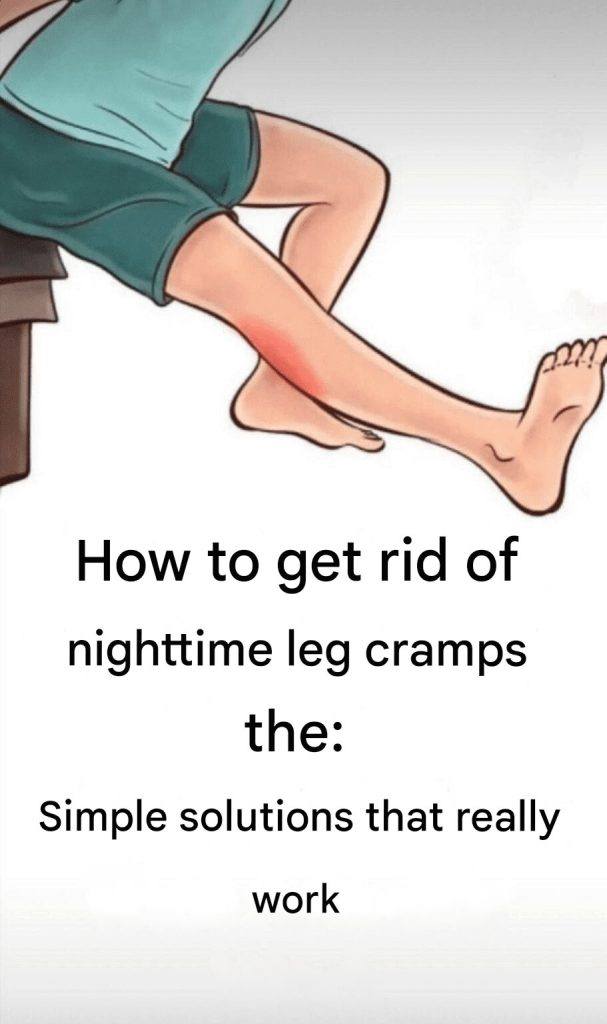
Nighttime leg cramps are common, especially in calves and feet, and they can be very painful—but in most cases they’re not dangerous. They’re usually caused by muscle fatigue, dehydration, low electrolytes, or poor circulation during sleep.
Here are simple, evidence-based ways that really help:
🦵 Immediate relief (when a cramp hits)
- Stretch the muscle
- For calf cramps: straighten your leg and pull toes toward you
- Stand up and walk slowly
- Massage the cramped muscle
- Apply warmth (hot towel or heating pad)
🟢 Daily habits that reduce cramps
💧 1. Stay hydrated
Dehydration is a major trigger
- Drink water throughout the day
- Avoid going to bed very dehydrated
🥗 2. Improve minerals (electrolytes)
Low magnesium, potassium, or calcium can contribute
Foods that help:
- Bananas (potassium)
- Milk / yogurt (calcium)
- Nuts & seeds (magnesium)
- Leafy greens
🦶 3. Stretch before bed (very effective)
Do 1–2 minutes before sleep:
- Calf stretches against a wall
- Light hamstring stretch
This reduces nighttime muscle tightening
🛌 4. Sleep position
- Avoid pointing toes downward for long periods
- Keep legs slightly relaxed, not tight under covers
🚶 5. Gentle daily movement
- Walking improves circulation
- Avoid sitting too long without movement
⚠️ When to be careful
See a doctor if cramps:
- happen very frequently
- are very painful or worsening
- come with swelling, numbness, or weakness
- occur mostly in one leg only
These could indicate circulation or nerve issues.
🧠 Simple summary
✔ Stretching + hydration = most effective
✔ Minerals help over time
✔ Warmth relieves pain quickly
❌ No “instant cure pill” exists
If you want, I can give you a 1-minute bedtime routine that prevents 80% of night cramps—very simple and especially helpful for older adults.
