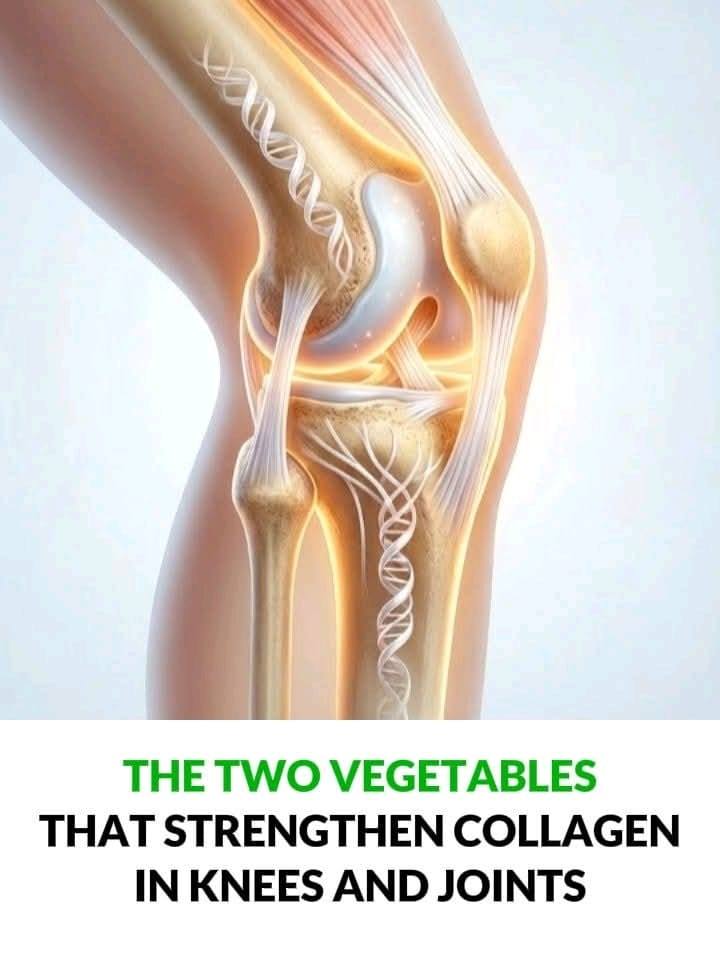
That kind of headline is again marketing language, not a real medical rule.
There are no “two vegetables” that directly strengthen collagen in knees and joints in a targeted, almost “repair-the-knee” way. Collagen health is influenced by overall nutrition and lifestyle, not a specific pair of foods.
What actually supports collagen in joints
Your body makes collagen using basic building blocks:
- Protein (amino acids) → from eggs, meat, dairy, legumes
- Vitamin C → essential for collagen formation
- Zinc & copper → involved in tissue repair
- Overall balanced diet
Vegetables that support joint health (indirectly)
Some vegetables are helpful because they reduce inflammation or provide nutrients:
- Leafy greens (spinach, kale) → vitamin C, antioxidants, vitamin K
- Cruciferous vegetables (broccoli, cabbage, cauliflower) → antioxidants and anti-inflammatory compounds
These don’t “rebuild knee cartilage,” but they support general joint and tissue health.
What matters more for knees than any vegetable
- Maintaining healthy weight (reduces knee load)
- Regular low-impact exercise (walking, cycling, swimming)
- Strength training for leg muscles
- Avoiding chronic inflammation (smoking, poor diet, inactivity)
Bottom line
There is no magical vegetable duo that rebuilds knee collagen. Real joint health comes from consistent nutrition + movement + weight management, not a shortcut food trick.
If you want, I can tell you which real foods have the strongest evidence for joint support and what actually helps knee pain in older adults.
