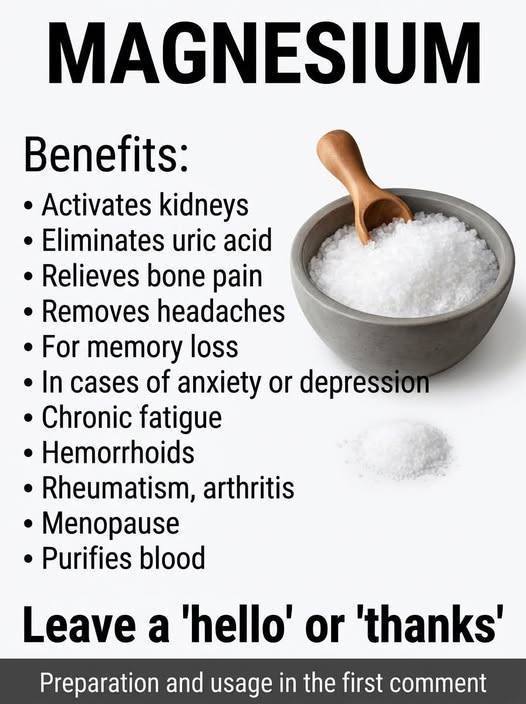
Magnesium is an essential mineral that plays a crucial role in over 300 biochemical reactions in the body. Its benefits are wide-ranging, from supporting bones and muscles to regulating the nervous system. Here’s a detailed look:
💪 Key Benefits of Magnesium
1. Supports Bone Health
- Magnesium helps absorb calcium and is vital for strong bones.
- Low magnesium can increase the risk of osteoporosis.
2. Heart and Blood Pressure Support
- Regulates heart rhythm and helps prevent arrhythmias.
- Helps lower blood pressure by relaxing blood vessels.
3. Muscle Function
- Necessary for muscle contraction and relaxation.
- Can help prevent cramps and spasms, especially in athletes.
4. Nervous System and Mood
- Magnesium supports neurotransmitter function, reducing stress, anxiety, and depression.
- Helps regulate sleep cycles, improving quality of sleep.
5. Energy Production
- Plays a role in ATP synthesis, the body’s main energy molecule.
- Low magnesium can lead to fatigue and weakness.
6. Blood Sugar Regulation
- Helps regulate insulin and blood sugar levels.
- Can reduce risk of type 2 diabetes when part of a balanced diet.
7. Migraine Prevention
- Some studies suggest magnesium reduces frequency and severity of migraines.
8. Anti-Inflammatory Effects
- Magnesium may reduce markers of inflammation, benefiting heart health and overall wellness.
🥦 Food Sources
- Leafy greens: spinach, kale
- Nuts and seeds: almonds, pumpkin seeds, sunflower seeds
- Whole grains: brown rice, oats
- Legumes: black beans, lentils
- Dark chocolate (70% or higher cocoa)
💡 Tips
- Adults generally need 310–420 mg/day, depending on age and sex.
- Magnesium supplements are available, but too much can cause diarrhea or upset stomach.
- Magnesium works best when combined with calcium, vitamin D, and potassium for overall health.
If you want, I can make a quick-reference chart showing magnesium benefits, symptoms of deficiency, and best food sources, so it’s easy to use as a daily guide.
Do you want me to make that chart?
