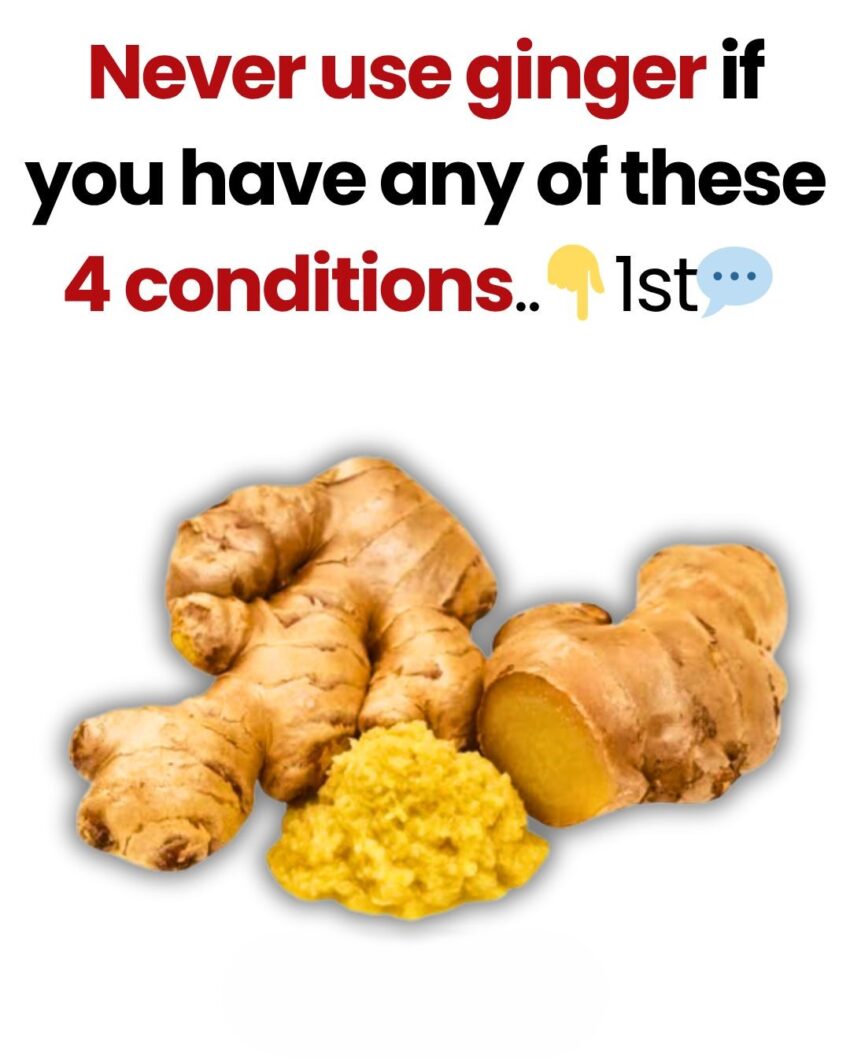
That kind of headline is another exaggerated “health warning” style post. Ginger is generally safe for most people, but there are a few situations where caution is needed.
Let’s separate fact from fear.
The plant is Ginger.
⚠️ 1. Bleeding disorders or blood-thinning medication
Ginger can mildly affect blood clotting.
Be careful if you:
- Have a bleeding disorder
- Take blood thinners (like warfarin or similar medicines)
👉 It doesn’t mean “never use ginger,” but avoid high doses or supplements unless a doctor approves.
⚠️ 2. Gallbladder problems (especially gallstones)
Ginger can stimulate bile production.
If you have:
- Gallstones
- Gallbladder inflammation
👉 It may worsen pain or discomfort in some cases.
⚠️ 3. Severe acid reflux or sensitive stomach
In some people, ginger can:
- Increase heartburn
- Irritate the stomach if taken in large amounts
👉 Small culinary amounts are usually fine.
⚠️ 4. Before surgery (important one)
Doctors often advise stopping ginger supplements before surgery because of:
- Slight blood-thinning effect
🧠 Important reality check
- Ginger is widely used in cooking and herbal tea safely
- Problems usually come from high-dose supplements, not normal food use
- “Never use ginger” claims are misleading and fear-based
✅ Bottom line
Ginger is safe for most people, but certain medical conditions require caution—not complete avoidance.
If you want, I can also tell you:
- Who benefits most from ginger, or
- Safe daily amounts for tea and cooking.
