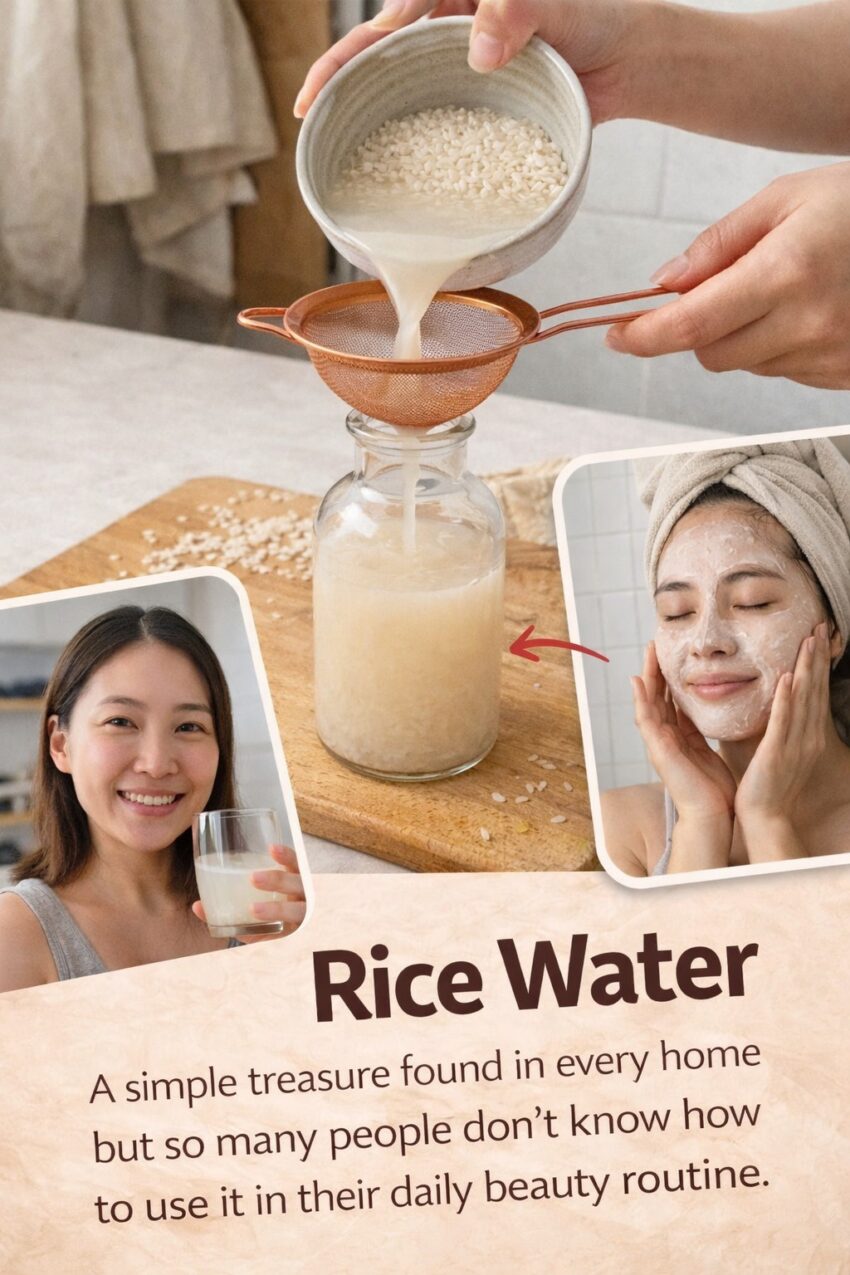
“Rice water” is one of those traditional beauty trends that keeps coming back—but it helps to separate real effects from hype.
It refers to the starchy water left after soaking or boiling rice, often used in skincare and hair care routines.
🌾 What rice water actually is
When rice is soaked or boiled, it releases:
- starch
- small amounts of amino acids
- minerals (like magnesium and zinc in tiny traces)
💇♀️ Hair use (most popular)
People use rice water as a rinse for hair because it may:
- make hair feel smoother
- reduce frizz temporarily
- improve shine
- help with detangling
👉 Why it seems to work:
The starch coats the hair shaft, giving a smoother feel—not because it “repairs” hair.
🧴 Skin use (less proven)
Some use it as a face toner or wash. It may:
- mildly soothe skin
- give a temporary soft, refreshed feel
- reduce oiliness slightly
But scientific evidence for long-term skin benefits is very limited.
⚠️ Things to be careful about
- Can cause irritation for sensitive skin
- Fermented rice water may smell and may not suit everyone
- Not a replacement for proper skincare (moisturizer, sunscreen, etc.)
- Can lead to buildup if used too often on hair
🧠 Reality check
Rice water is:
- ✅ a mild natural cosmetic rinse
- ❌ not a “miracle treatment” for hair growth or skin repair
- ❌ not a substitute for medical skincare treatments
💡 Bottom line
It’s a low-cost, traditional beauty rinse that can give temporary cosmetic benefits, mainly for softness and shine—but results vary widely.
If you want, I can show you a safe DIY rice water routine (hair + face) or explain whether it actually helps with hair growth myths that go viral online.
