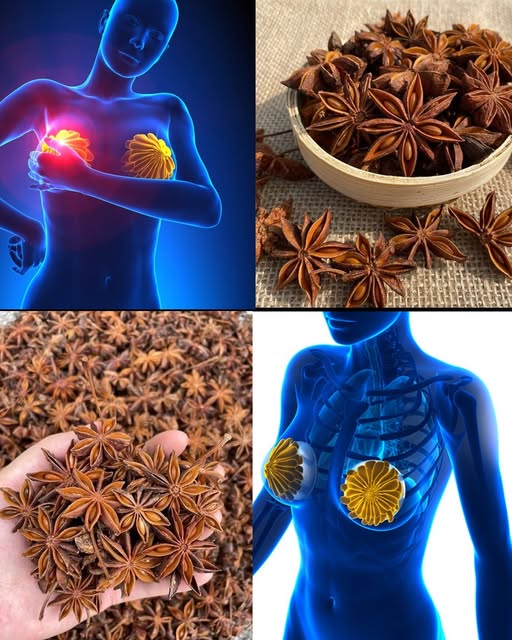
Star anise is a fragrant spice commonly used in cooking, herbal medicine, and even in some beverages. Here’s a detailed overview:
1. What Is Star Anise?
- Scientific name: Illicium verum
- Native to China and Vietnam.
- Named for its star-shaped pods, usually containing 6–8 points, each with a seed inside.
- Has a sweet, licorice-like flavor, similar to aniseed but stronger.
2. Culinary Uses
- Asian cuisine: Key ingredient in Chinese five-spice powder, pho (Vietnamese soup), and braised dishes.
- Baking: Adds flavor to cookies, cakes, and mulled wine.
- Teas and infusions: Often steeped to make calming herbal teas.
3. Health Benefits
- Digestive aid: Can reduce bloating, gas, and indigestion.
- Antimicrobial properties: Contains compounds that fight certain bacteria and fungi.
- Antioxidant-rich: Helps combat oxidative stress in the body.
- Respiratory support: Sometimes used in remedies for coughs and colds.
4. Active Compound
- Shikimic acid: A compound used as a precursor for the antiviral drug oseltamivir (Tamiflu).
- Anethole: Gives the characteristic sweet licorice flavor and contributes to digestive and antimicrobial effects.
5. Tips for Use
- Whole pods: Add to soups, stews, or slow-cooked dishes, then remove before serving.
- Ground star anise: Can be used in baking or spice blends.
- Moderation: Strong flavor, so a little goes a long way.
💡 Fun fact: Star anise is different from Japanese star anise (Illicium anisatum), which is toxic and should never be ingested. Always use the culinary variety (Illicium verum).
If you want, I can make a quick guide of 5 simple recipes using star anise that highlight both its flavor and health benefits—it’s surprisingly versatile.
Do you want me to do that?
