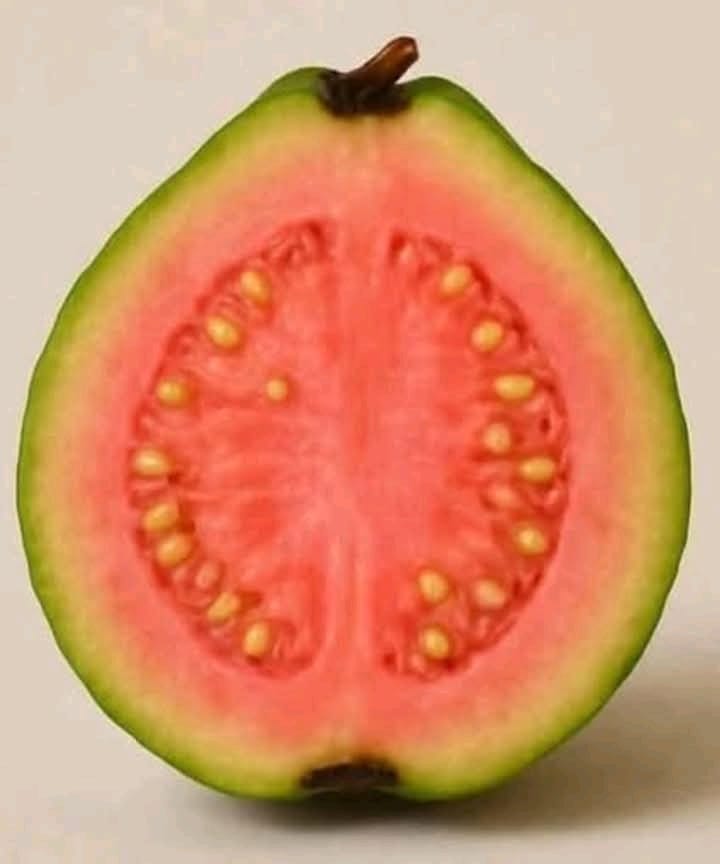
Strawberry guava is an interesting tropical fruit with both culinary and ecological significance. Here’s a detailed overview:
Botanical Information
- Scientific name: Psidium cattleianum
- Family: Myrtaceae, same as common guava.
- Native to: Brazil and other parts of South America.
- Common names: Strawberry guava, Cattley guava, cherry guava.
Appearance
- Fruit: Small, round, bright red or yellow when ripe, about the size of a large marble.
- Flesh: Sweet, aromatic, with a flavor reminiscent of strawberries mixed with guava.
- Seeds: Numerous small seeds in the center.
Uses
- Culinary
- Eaten fresh, in smoothies, jams, jellies, and desserts.
- Can be used to make sauces or flavor beverages.
- Traditional / Medicinal
- Leaves and fruit are used in folk medicine for digestive and anti-inflammatory purposes.
- Ecological Impact
- In places like Hawaii, strawberry guava is considered invasive, forming dense thickets that crowd out native plants.
- It spreads rapidly due to birds eating the fruit and dispersing seeds.
Nutritional Benefits
- Rich in vitamin C (even more than oranges in some cases).
- Contains dietary fiber, antioxidants, and minerals like potassium.
- Low-calorie fruit with natural sweetness.
Growing Tips
- Prefers tropical and subtropical climates.
- Thrives in well-drained soil and full sun.
- Can be propagated from seeds or cuttings.
💡 Fun Fact: Despite its small size, strawberry guava packs a surprisingly intense aroma and flavor, making it a favorite for exotic jams and fruit preserves.
If you want, I can also explain why it’s considered invasive in certain regions and how to control it — it’s a pretty fascinating ecological story. Do you want me to?
