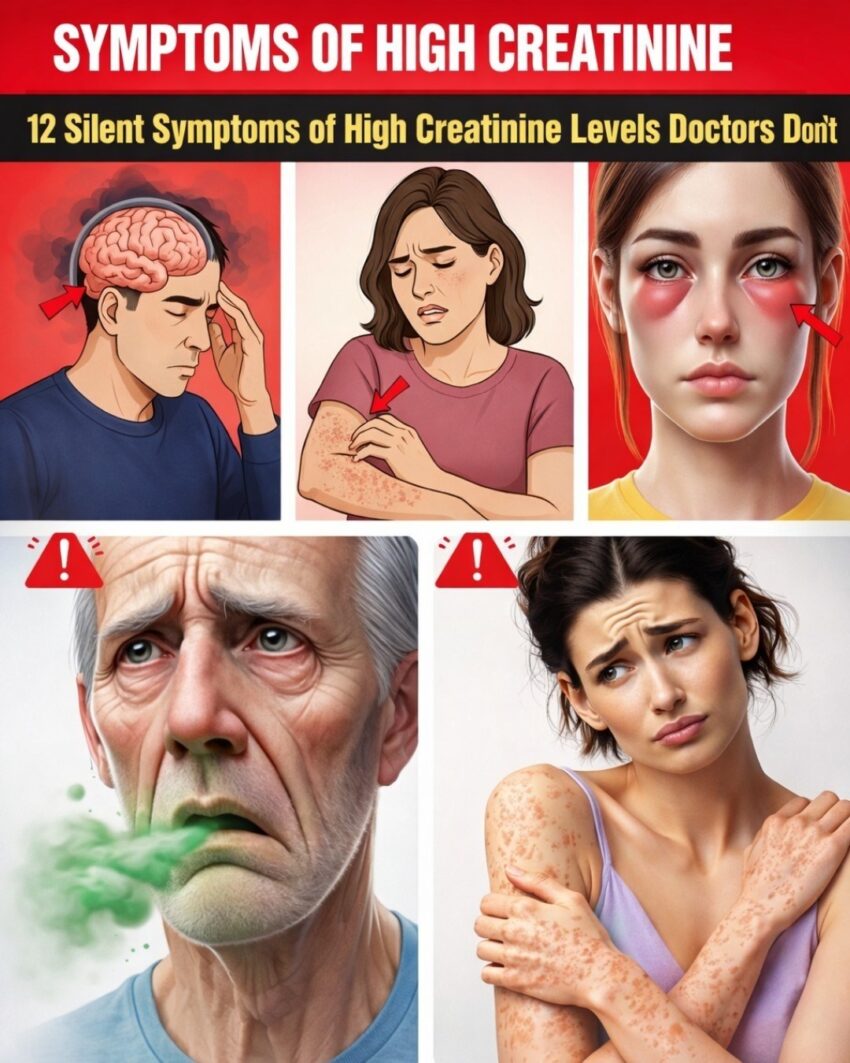
That headline is misleading. “Silent symptoms of high creatinine” is often used to create fear, but high creatinine itself is not a disease—it’s a lab result.
Creatinine is a waste product filtered by the Kidneys, and high levels usually mean the kidneys may not be working properly.
🧪 What “high creatinine” actually means
It can suggest reduced kidney function, often linked with Chronic kidney disease, dehydration, or other medical conditions.
⚠️ Real symptoms (when kidney function is affected)
Early kidney issues often have no clear symptoms, which is why lab tests matter. When symptoms do appear, they may include:
1. Fatigue and weakness
Because waste builds up in the blood.
2. Swelling (edema)
Especially in feet, ankles, or face due to fluid retention.
3. Changes in urination
- Foamy urine
- Frequent or reduced urination
- Dark-colored urine
4. Loss of appetite
Feeling full or nauseated easily.
5. Nausea or vomiting
Due to toxin buildup in advanced cases.
6. Itchy skin
Waste accumulation can irritate the skin.
7. Muscle cramps
Often linked to electrolyte imbalance.
🧠 Important reality check
- Many people with slightly high creatinine feel completely normal
- Symptoms usually appear only when kidney function is significantly reduced
- Creatinine alone is not enough for diagnosis—doctors use full kidney tests (eGFR, urine analysis)
🚨 When to see a doctor
You should get medical advice if:
- Creatinine is repeatedly high in blood tests
- You have swelling, fatigue, or urine changes
- You have diabetes or high blood pressure
🧠 Bottom line
High creatinine is a warning sign from a lab test, not a list of “silent symptoms.” Real symptoms appear only when kidney function is affected, and early detection is usually through testing—not feeling.
If you want, I can explain what normal creatinine levels are and how to naturally protect kidney health.
