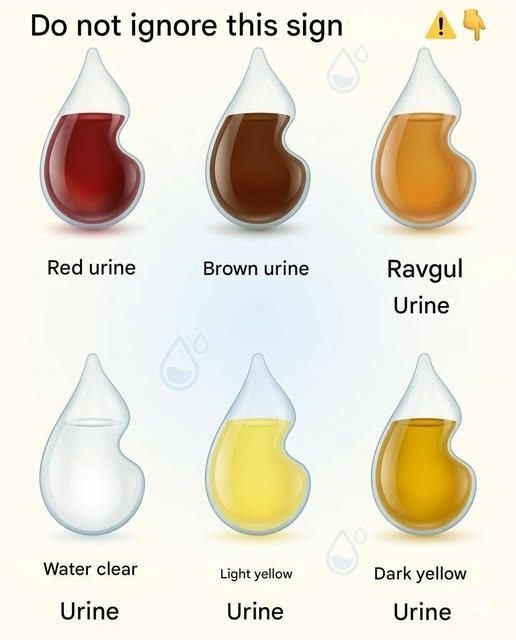
Here’s a simple urine color guide to help you understand what different colors may mean. Keep in mind that hydration, diet, and medications can all affect urine color.
💧 Normal Range
🟡 Light yellow (straw color)
- What it means: Normal and healthy
- Why: Good hydration and normal pigment (urochrome)
🟨 Dark yellow / amber
- What it means: Mild dehydration
- Fix: Drink more water
⚠️ Possible Causes to Watch
🟠 Orange
- Dehydration (more concentrated urine)
- Certain medications (like some antibiotics or vitamins)
- Rarely: liver or bile duct issues if persistent
🩷 Pink or red
- Possible blood in urine
- Can also come from foods like beets or berries
- If not food-related: may indicate infection, stones, or other urinary issues → needs medical check
🟤 Brown / cola-colored
- Severe dehydration
- Liver conditions (bile pigments)
- Muscle breakdown (rare but serious)
- Should be evaluated if persistent
🟢 Blue or green (rare)
- Food dyes
- Certain medications
- Rare metabolic or bacterial causes
⚪ Cloudy or milky
- Possible urinary tract infection
- Excess minerals or pus
- Sometimes dehydration or diet-related
🚨 When to see a doctor
Seek medical advice if you notice:
- Blood (pink/red) without clear food cause
- Brown or dark urine lasting more than a day
- Pain, burning, fever, or frequent urination
- Cloudy urine with discomfort
💡 Quick rule of thumb
- Pale yellow = good hydration 👍
- Darker = drink more water 💧
- Unusual colors + symptoms = check it out ⚠️
If you want, I can also give you a hydration chart (how much water to drink based on urine color) or explain UTI symptoms in detail.
