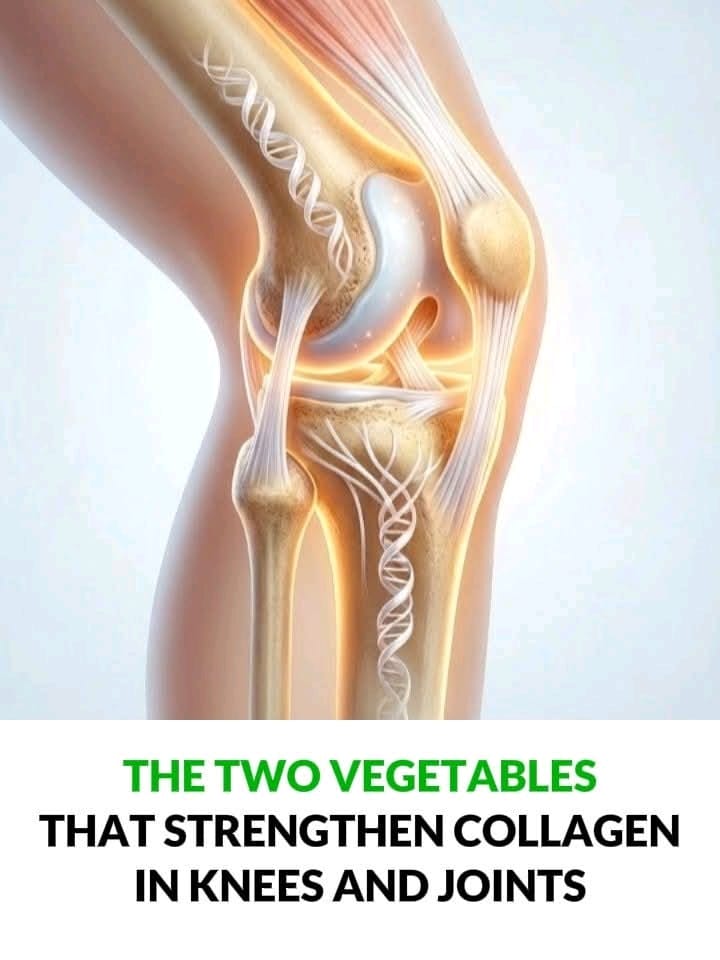
Great question — especially if you’re thinking about joint health long-term.
First, an important clarification:
No vegetable directly “rebuilds” knee cartilage or instantly increases collagen in joints. However, certain vegetables provide nutrients your body needs to produce and protect collagen, and reduce inflammation that breaks it down.
Here are the most helpful ones:
🥬 1. Leafy Greens (Spinach, Kale, Swiss Chard)
Why they help:
- Rich in vitamin C (essential for collagen production)
- High in antioxidants that protect joint tissues
- Contain vitamin K, which supports bone health
🥦 2. Broccoli
One of the best vegetables for joint support.
Benefits:
- High in vitamin C
- Contains sulforaphane, which may help slow cartilage breakdown
- Anti-inflammatory properties
🫑 3. Bell Peppers (Especially Red & Yellow)
- Extremely high in vitamin C
- Support natural collagen formation
- Low in calories, high in antioxidants
Red bell peppers actually contain more vitamin C than oranges.
🧄 4. Garlic
- Contains sulfur compounds
- Sulfur is needed for collagen production
- May help reduce joint inflammation
🥕 5. Carrots
- Rich in beta-carotene (converted to vitamin A)
- Supports tissue repair
- Contains antioxidants that protect joints
🧅 6. Onions
- Contain sulfur compounds (like garlic)
- May help reduce inflammation
🍅 7. Tomatoes
- Rich in lycopene
- Anti-inflammatory and antioxidant benefits
- Support overall joint health
🔹 Nutrients That Actually Support Collagen
To strengthen collagen in knees and joints, your body needs:
- Vitamin C → leafy greens, peppers, broccoli
- Sulfur → garlic, onions, cruciferous vegetables
- Copper → mushrooms, leafy greens
- Zinc → legumes, seeds
- Protein → very important (collagen is made from amino acids)
Without enough protein, collagen production will be limited no matter how many vegetables you eat.
Important Reality Check
If knee pain is from:
- Osteoarthritis
- Cartilage loss
- Injury
Vegetables help slow damage and reduce inflammation, but they do not regrow cartilage on their own.
Weight control, strength training (especially quads), omega-3 fats, and proper medical care matter more for long-term joint protection.
If you’d like, tell me:
- Is your knee pain from arthritis, injury, or general stiffness?
- Your age?
I can tailor advice more specifically.
