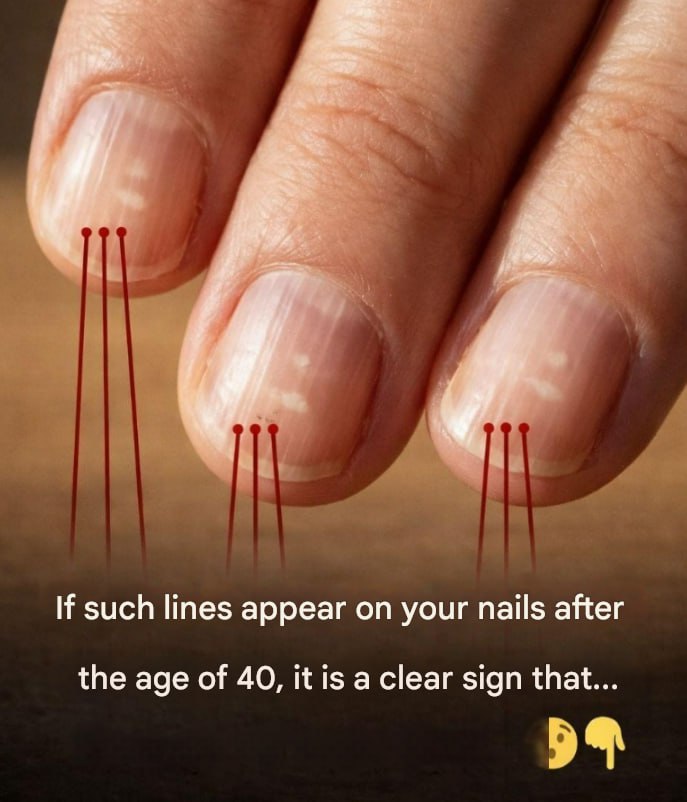
Vertical lines on nails after age 40 are usually a normal part of aging, but sometimes they can hint at health issues. Here’s a detailed breakdown:
🟤 What vertical lines are
- Called longitudinal ridges
- Run from the cuticle to the tip of the nail
- Often more noticeable as you age
✅ Common, harmless causes
- Aging – Nails naturally develop ridges over time
- Minor trauma – Bumping or frequent manicures
- Dryness – Nails can become brittle with age
These are usually not a health concern if the nail color and texture remain normal.
⚠️ Possible medical causes
If ridges are accompanied by other changes (discoloration, thickening, splitting, or spooning), it could indicate:
- Nutrient deficiencies – Iron, zinc, biotin, or protein
- Thyroid problems – Hypothyroidism can affect nails
- Skin conditions – Eczema or psoriasis
- Circulatory issues – Rarely, changes in blood flow
💅 How to care for your nails
- Keep nails moisturized (cuticle oil, hand cream)
- Avoid harsh chemicals or over-filing
- Maintain a balanced diet rich in protein, vitamins, and minerals
- Wear gloves during cleaning or gardening
🩺 When to see a doctor
- Sudden or severe changes in nail color or shape
- Nails becoming very brittle, soft, or painful
- Vertical ridges accompanied by white spots, yellowing, or spooning
🧠 Bottom line
Vertical lines after 40 are usually normal aging, but persistent or dramatic changes in your nails should be evaluated for nutritional or health issues.
If you want, I can make a quick guide to improving nail health after 40, including foods, supplements, and simple care tips that can reduce ridges and improve nail strength.
