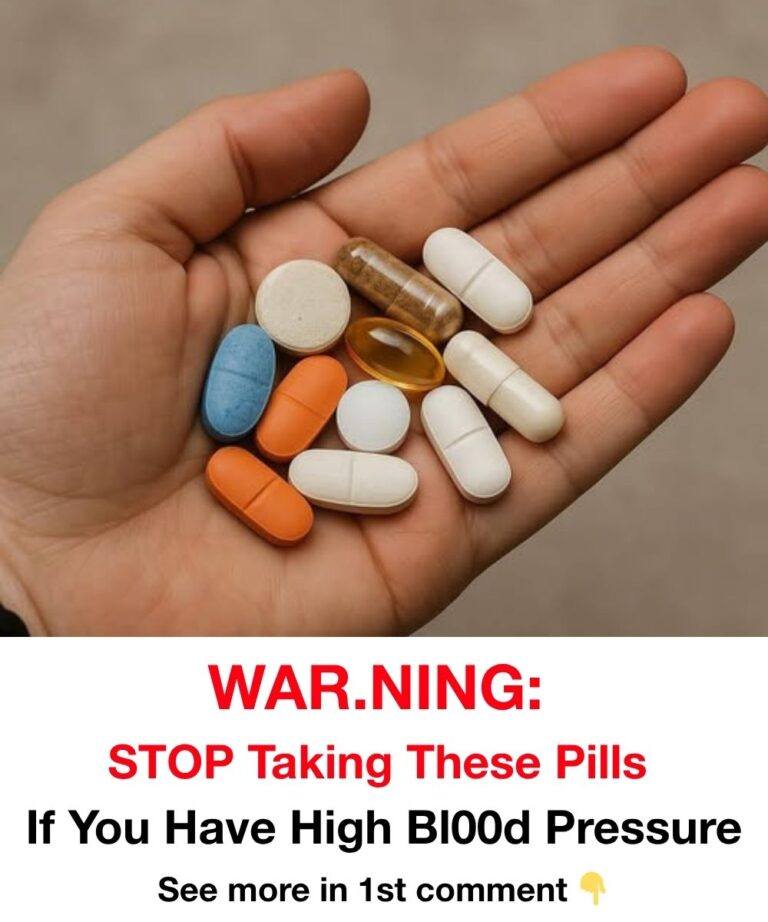
That kind of warning is too vague to trust. For people with high blood pressure, there isn’t a universal list of pills you must “stop”—and stopping the wrong medication can actually be dangerous.
What is true is that some medicines can raise blood pressure or interfere with treatment, but it depends on the person and situation.
Medications that can affect blood pressure
These don’t mean “never take them,” but they should be used carefully:
- Ibuprofen and other NSAIDs
→ Can increase blood pressure and affect kidney function, especially with long-term use - Pseudoephedrine
→ Common in cold/flu meds; can raise BP and heart rate - Prednisone
→ May increase fluid retention and BP - Hormonal medications (like some contraceptives)
→ Can affect BP in some people - Certain herbal supplements
→ For example, licorice root can raise blood pressure
Important reality
- Many people with high BP are prescribed medicines specifically to lower it
- Stopping prescribed drugs suddenly can lead to:
- dangerous spikes in blood pressure
- increased risk of stroke or heart attack
What you should actually do
- Check labels on over-the-counter meds (especially cold/flu products)
- Ask a doctor or pharmacist before starting anything new
- Never stop prescribed BP medication without medical advice
Bottom line
There’s no secret list of “forbidden pills.”
The real rule is: manage medications carefully, not fearfully.
If you want, tell me what medication that warning mentioned (or what you’re taking), and I’ll explain clearly whether it’s actually a concern for high blood pressure.
