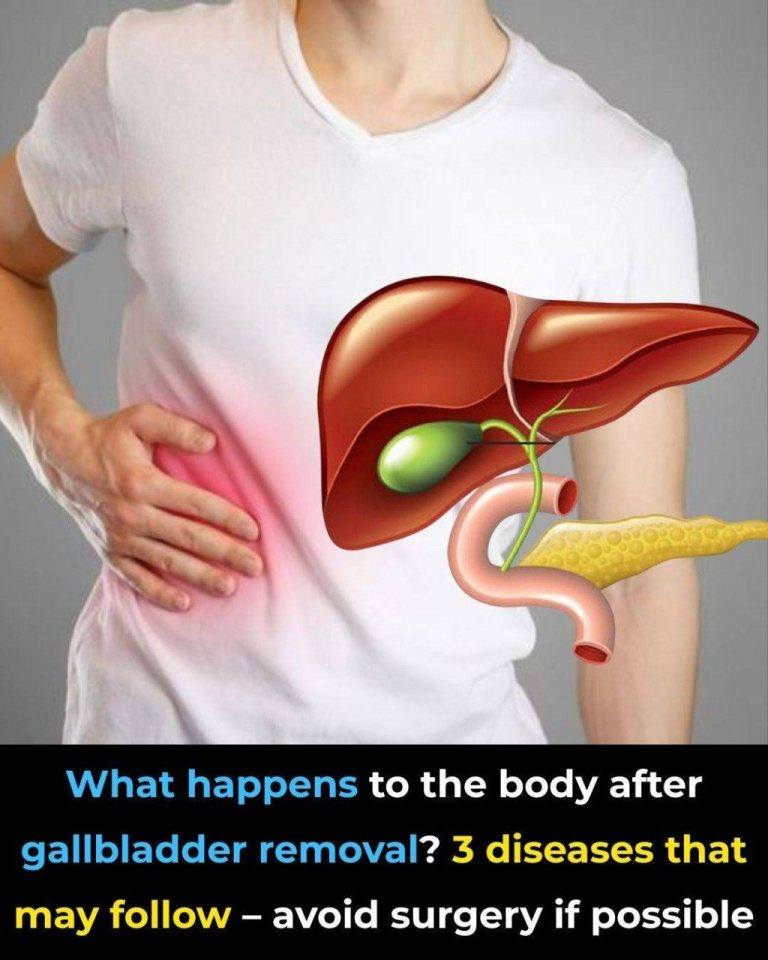
That headline is trying to scare you. Gallbladder removal—called Cholecystectomy—is a very common and generally safe procedure. For many people (especially with painful gallstones), surgery actually prevents serious complications, not causes them.
🧠 What really happens after removal
The gallbladder stores bile. After surgery:
- Your liver still makes bile
- Bile flows directly into the intestine instead of being stored
Most people digest food normally after a short adjustment period.
👍 Common (usually temporary) effects
- Mild diarrhea
- Bloating after fatty meals
- Changes in bowel habits
These often improve within weeks to months.
⚠️ Possible longer-term issues (not guaranteed)
Some people may experience:
1. Digestive sensitivity
- Trouble digesting very fatty foods
- Occasional loose stools
2. Postcholecystectomy syndrome
- Ongoing abdominal discomfort, bloating, or diarrhea
- Happens in a minority of patients
3. Slightly increased risk of bile-related reflux
- Bile can irritate the stomach or intestines in some cases
❗ About the “3 diseases” claim
Viral posts often exaggerate by saying:
- “You’ll develop serious diseases after surgery”
There is no strong evidence that gallbladder removal directly causes major diseases in most people. The bigger risk is actually not treating gallstones, which can lead to:
- Infection
- Pancreatitis (dangerous)
- Blocked bile ducts
🥗 How to stay healthy after surgery
- Eat smaller, lighter meals at first
- Reduce very greasy/fried foods
- Gradually return to a normal balanced diet
⚖️ Bottom line
- Surgery is not something to “avoid at all costs”
- It’s recommended when benefits outweigh risks (especially with symptoms)
- Most people live completely normal lives without a gallbladder
If you’re asking because you or someone has gallstones, tell me the symptoms—you might not even need surgery depending on the case.
