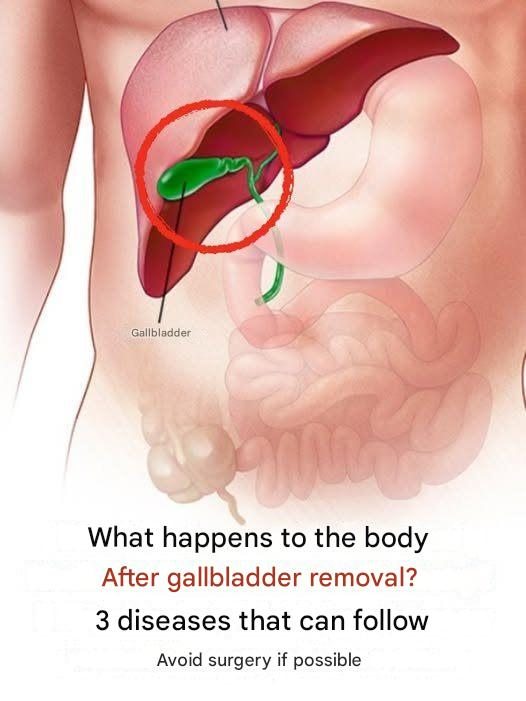
This is a fear-framed claim mixed with partial truth.
Yes, the gallbladder can be removed—but the idea that you should “avoid surgery if possible” is not always safe advice. Surgery is done when medically necessary.
🟡 Gallstones → leads to surgery in many cases
🟢 Cholecystitis
When these conditions become severe, doctors may recommend removal of the gallbladder.
🧠 What happens after gallbladder removal?
The gallbladder stores bile (used to digest fat). After removal:
- Bile flows directly from liver to intestine
- Digestion still works, but less “controlled”
- Some people need time to adjust
⚠️ Common temporary effects (not “diseases”)
After surgery, some people may experience:
- Loose stools or diarrhea
- Bloating or gas
- Difficulty digesting very fatty foods
👉 These usually improve over time.
🩺 “3 diseases that can follow” — reality check
There is no proven list of 3 new diseases caused directly by gallbladder removal, but some possible long-term issues in a minority of people include:
1. Post-cholecystectomy diarrhea
- Due to continuous bile flow
- Usually manageable with diet
2. Bile reflux gastritis (rare)
- Bile irritates stomach
- Causes burning or discomfort
3. Sphincter of Oddi dysfunction (rare)
- Bile flow regulation issue
- Can cause pain similar to gallstones
⚠️ Important truth about “avoid surgery”
Gallbladder surgery is usually recommended when:
- Recurrent painful gallstones
- Infection or inflammation
- Blockage of bile ducts
👉 If untreated, complications can be more dangerous than surgery.
🧾 Bottom line
- Gallbladder removal is generally safe and common
- Some digestive changes can happen, usually temporary
- There is no proof of predictable “3 diseases” after surgery
- “Avoid surgery if possible” is not always correct—depends on medical condition
If you want, I can explain:
- How to live normally after gallbladder removal
- Or foods to eat/avoid after surgery 👍
