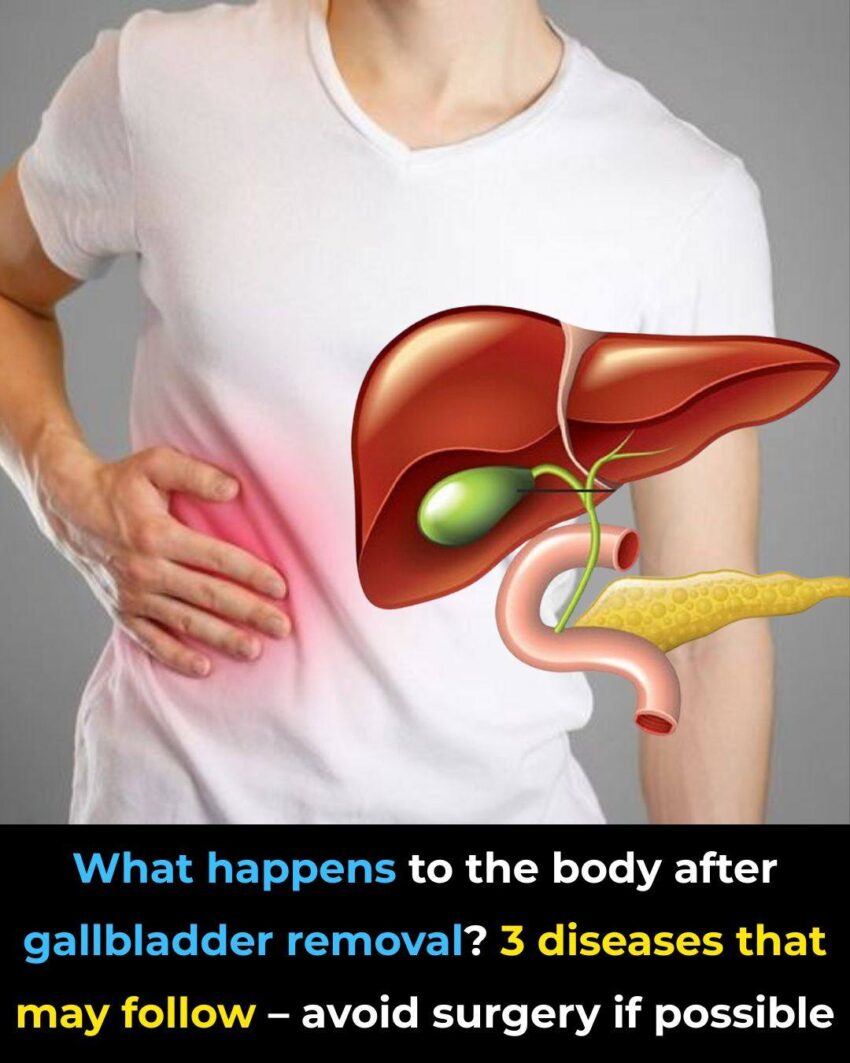
When your gallbladder is removed—a procedure called cholecystectomy—your body undergoes some adjustments because the gallbladder plays a key role in storing and releasing bile to digest fats. Here’s what typically happens:
1. Bile flows differently
- Normally, the gallbladder stores bile produced by the liver and releases it in bursts when you eat fatty foods.
- Without it, bile continuously drips into the small intestine.
- This can lead to looser stools or mild diarrhea, especially after high-fat meals, though many people adapt over time.
2. Fat digestion changes
- Since bile isn’t released in a concentrated burst, digesting large amounts of fat at once can be harder.
- People may notice bloating, gas, or indigestion initially.
- Eating smaller, low-fat meals can help the body adjust.
3. Possible temporary digestive changes
- Some may experience nausea, burping, or heartburn for a few weeks after surgery.
- Most symptoms improve as the liver compensates and the digestive system adjusts.
4. Long-term adaptation
- The liver increases bile production, and the intestines learn to handle the constant flow.
- Many people return to normal digestion within a few months.
5. Rare complications
- Postcholecystectomy syndrome: persistent abdominal pain, bloating, or diarrhea in some cases.
- Bile duct issues: strictures or stones may occur but are uncommon.
💡 Tips for adjustment:
- Eat smaller, more frequent meals.
- Reduce high-fat foods temporarily.
- Stay hydrated and increase fiber gradually to prevent diarrhea.
- Introduce new foods slowly to see how your body reacts.
Your body is surprisingly adaptable—most people live fully normal lives without a gallbladder.
If you want, I can make a list of foods that are easiest on your digestion after gallbladder removal, which helps prevent discomfort. Do you want me to do that?
