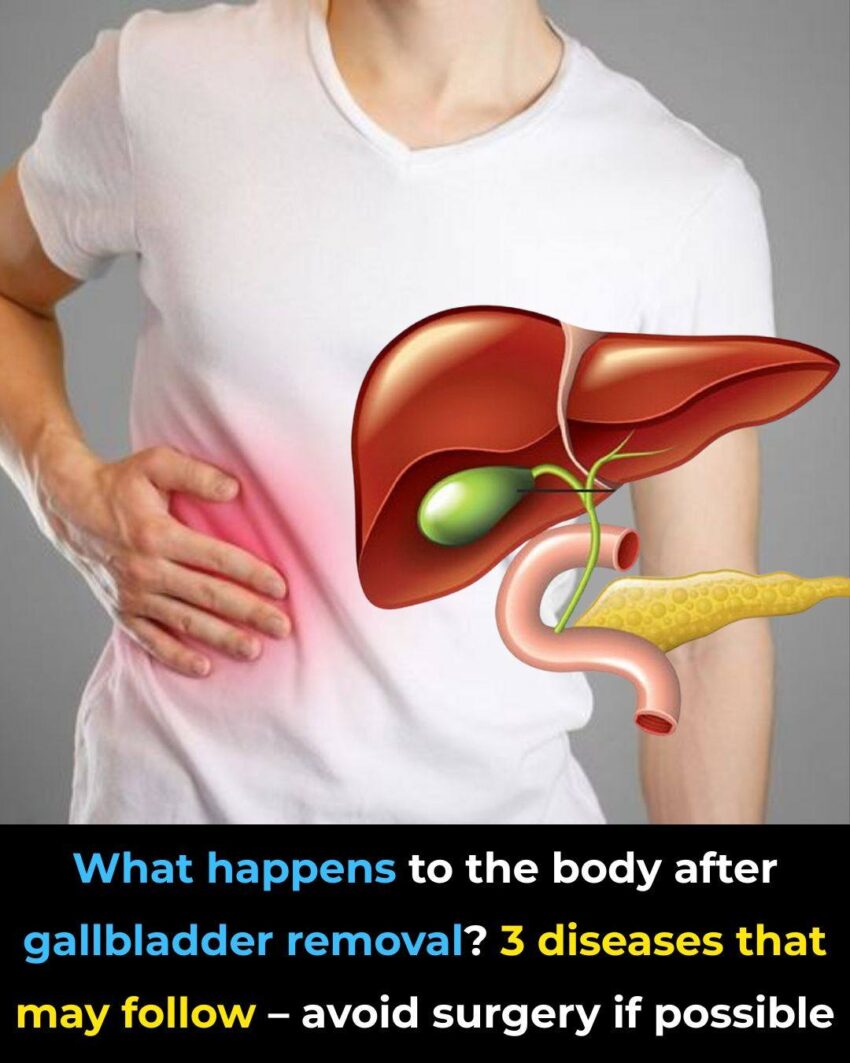
When the gallbladder is removed (a procedure called cholecystectomy), the body undergoes several adjustments because the gallbladder’s role in digestion changes. Here’s a clear breakdown of what happens:
🟢 What the Gallbladder Does
- Stores bile produced by the liver
- Releases bile into the small intestine to digest fats
- Helps absorb fat-soluble vitamins (A, D, E, K)
⚠️ Immediate Changes After Surgery
- Bile flows continuously
- Without a storage pouch, bile trickles directly from the liver into the intestine.
- This can make fat digestion less efficient, especially after large or greasy meals.
- Digestive symptoms may appear
- Diarrhea, bloating, or gas
- Feeling of fullness or discomfort after fatty meals
- Temporary dietary adjustments
- Many patients are advised to eat smaller, low-fat meals for a few weeks after surgery.
🟡 Long-Term Effects
- Most people adapt
- Over weeks to months, the digestive system adjusts.
- Many can return to a normal diet, though very fatty meals may still trigger discomfort.
- Vitamin absorption may change slightly
- Fat-soluble vitamin deficiencies are rare but possible in some cases.
- Maintaining a balanced diet with healthy fats is important.
- Risk of bile reflux or diarrhea
- A small percentage of people develop chronic diarrhea or bile reflux, which can usually be managed with diet changes or medications.
✅ Tips for Managing Life Without a Gallbladder
- Eat smaller, more frequent meals
- Limit very fatty, fried, or greasy foods
- Include fiber gradually to support digestion
- Stay hydrated and monitor for persistent digestive issues
- Discuss supplements with your doctor if needed (especially fat-soluble vitamins)
In short, after gallbladder removal, your body can still digest food normally, but fat digestion is slower and sometimes uncomfortable at first. Most people adjust within weeks to months.
If you want, I can make a “what to eat and what to avoid after gallbladder removal” guide that helps digestion and prevents discomfort.
Do you want me to do that?
