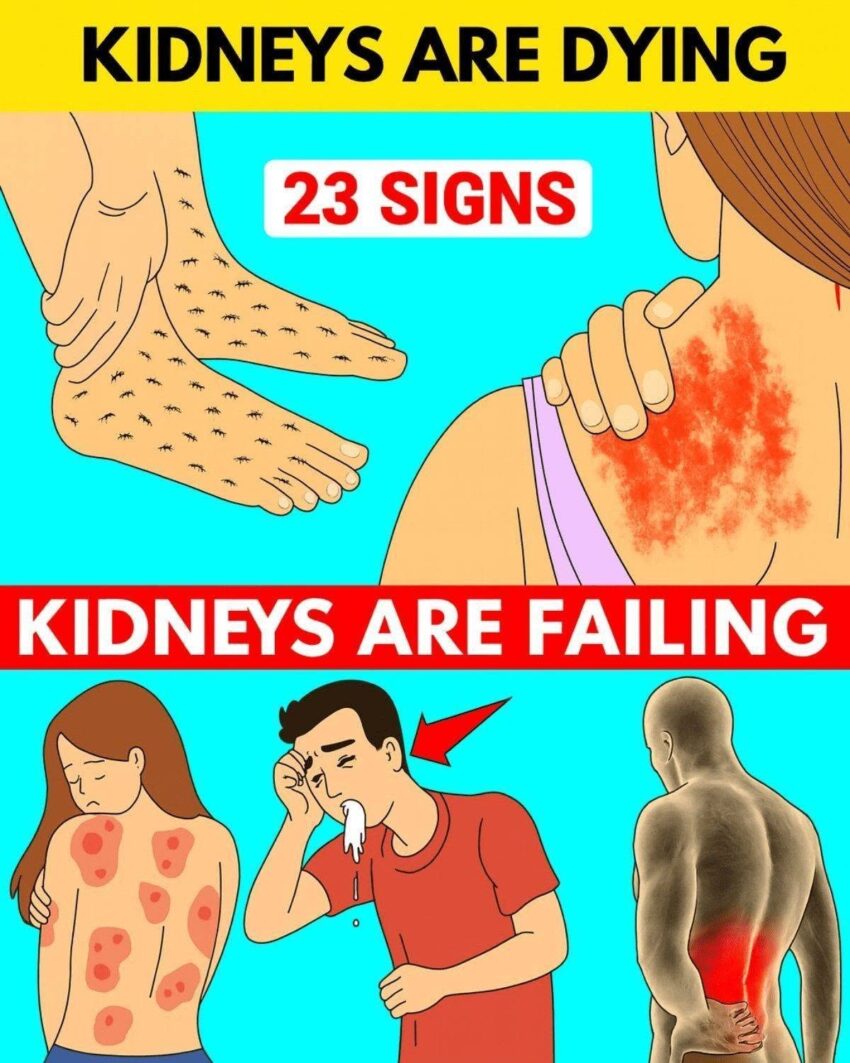
23 Signs Your Kidneys Might Be in Trouble
The kidneys help remove waste from the blood, balance fluids, control blood pressure, and support healthy red blood cell production. Kidney problems can develop quietly, and symptoms may not appear until kidney function has declined.
These signs do not always mean you have kidney disease, but they may be worth discussing with a healthcare professional—especially if they are new, persistent, or occur together.
1. Changes in urination
- Urinating much more or much less than usual
- Waking up frequently at night to urinate
- Urine that looks unusually foamy (possible protein in urine)
- Blood in the urine
- Pain or burning during urination
2. Swelling in the body
Reduced kidney function can contribute to fluid buildup, causing swelling in:
- Ankles and feet
- Legs
- Hands
- Around the eyes
3. Unusual fatigue
Kidney problems can contribute to anemia and waste buildup, which may cause:
- Low energy
- Weakness
- Feeling tired despite enough rest
4. Trouble concentrating or feeling confused
Waste buildup in the blood can affect how some people feel mentally.
5. Loss of appetite
Some people with kidney problems experience reduced appetite or changes in taste.
6. Nausea or vomiting
A buildup of waste products may cause digestive symptoms in more advanced kidney disease.
7. Itchy skin
Persistent itching can occur when mineral and waste balance is affected.
8. Dry or irritated skin
Changes in fluid balance can contribute to skin dryness.
9. Muscle cramps
Electrolyte changes may contribute to cramps or muscle discomfort.
10. Shortness of breath
Fluid buildup or anemia related to kidney disease can affect breathing.
11. High blood pressure
Kidney disease and high blood pressure can worsen each other.
12. Back or side pain
Pain in the kidney area may occur with certain kidney conditions, infections, or stones.
13. Bad breath or a metallic taste
Some people with advanced kidney problems notice changes in taste or breath odor.
14. Weight changes
Unexpected weight loss or fluid-related weight gain may occur.
15. Puffy eyes in the morning
Fluid retention can sometimes appear around the eyes.
16. Frequent urinary infections
Repeated infections may require medical evaluation.
17. Fever with urinary symptoms
This can suggest a kidney infection, which needs prompt treatment.
18. Difficulty sleeping
Itching, restless legs, or frequent nighttime urination may interfere with sleep.
19. Foamy urine that persists
This can be a sign of protein leaking into the urine and should be checked.
20. Blood in urine
Even small amounts of blood should be evaluated.
21. Persistent thirst
Changes in fluid balance can affect thirst patterns.
22. Numbness or tingling
Advanced kidney problems can affect nerves in some people.
23. Changes found on routine tests
Kidney disease is often detected through:
- Blood tests (such as creatinine and eGFR)
- Urine tests (such as checking for protein or blood)
Who has a higher risk of kidney disease?
Risk is increased with:
- Diabetes
- High blood pressure
- Older age
- Family history of kidney disease
- Heart disease
- Long-term use of certain medications (especially some pain relievers)
When to seek medical care quickly
Get medical attention for:
- Little or no urine output
- Severe swelling
- Chest pain or severe shortness of breath
- Blood in urine
- Severe flank pain with fever
- Confusion or extreme weakness
Regular checkups and controlling blood pressure and blood sugar are among the most effective ways to protect kidney health.
