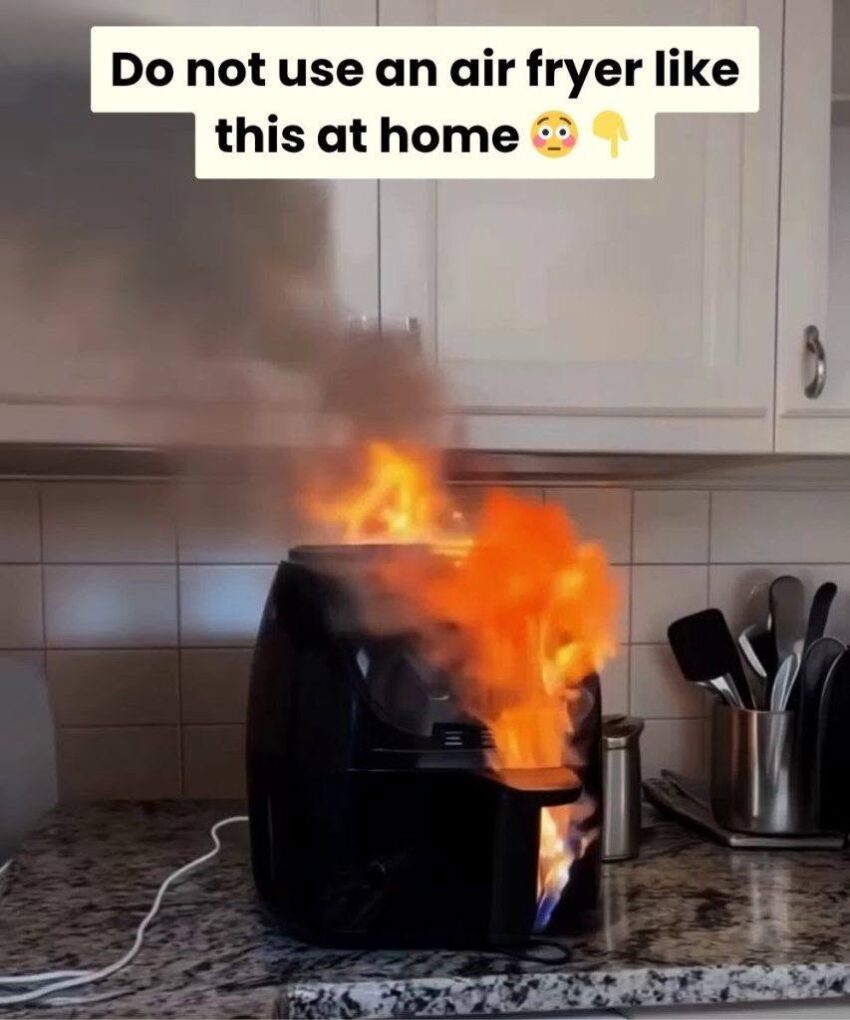
5 Places You Should Never Use Your Air Fryer Indoors
An air fryer is designed for safe indoor countertop use, but where you place it inside your home matters a lot. Poor placement can lead to overheating, fire risk, smoke buildup, or damage to nearby surfaces.
1. Inside Cabinets or Closed Spaces
Never run an air fryer inside:
- Kitchen cabinets
- Closed shelves
- Tight enclosures
Why it’s dangerous:
- Air fryers release hot air from the back/top
- Heat gets trapped → risk of overheating and fire
- Can damage cabinet wood or coating
2. Against a Wall or Very Close to Surfaces
Avoid placing it directly against:
- Walls
- Backsplashes
- Curtains or paper items
Why:
- Hot exhaust air can scorch or discolor surfaces
- Heat buildup reduces appliance efficiency
- Can damage paint or wallpaper over time
3. On Plastic, Cloth, or Heat-Sensitive Surfaces
Do NOT place it on:
- Plastic tables
- Tablecloths
- Wooden surfaces without protection
Why:
- Bottom heat can melt or burn materials
- Risk of fire from prolonged cooking sessions
👉 Always use a heat-resistant, flat surface (like stone or metal countertop)
4. Near Water Sources (Sink, Dishwasher, Wet Counter)
Avoid placing it:
- Beside a sink
- Near dripping water
- In wet kitchen corners
Why:
- Electricity + water = shock hazard
- Steam + moisture can affect wiring over time
5. In Small, Poorly Ventilated Rooms
Never use it in:
- Closed bedrooms
- Small storage rooms
- Enclosed offices
Why:
- Air fryers release heat and cooking fumes
- Poor ventilation = heat buildup + smoke smell + discomfort
Bonus Safety Tips (Important)
- Leave at least 10–15 cm (4–6 inches) of space around all sides
- Do not block air vents
- Clean grease regularly to prevent smoke
- Do not leave it running unattended for long periods
Bottom line
An air fryer is safe indoors only when used on a stable, open, heat-resistant surface with proper airflow. The biggest risks come from trapping heat or placing it too close to flammable or heat-sensitive materials.
