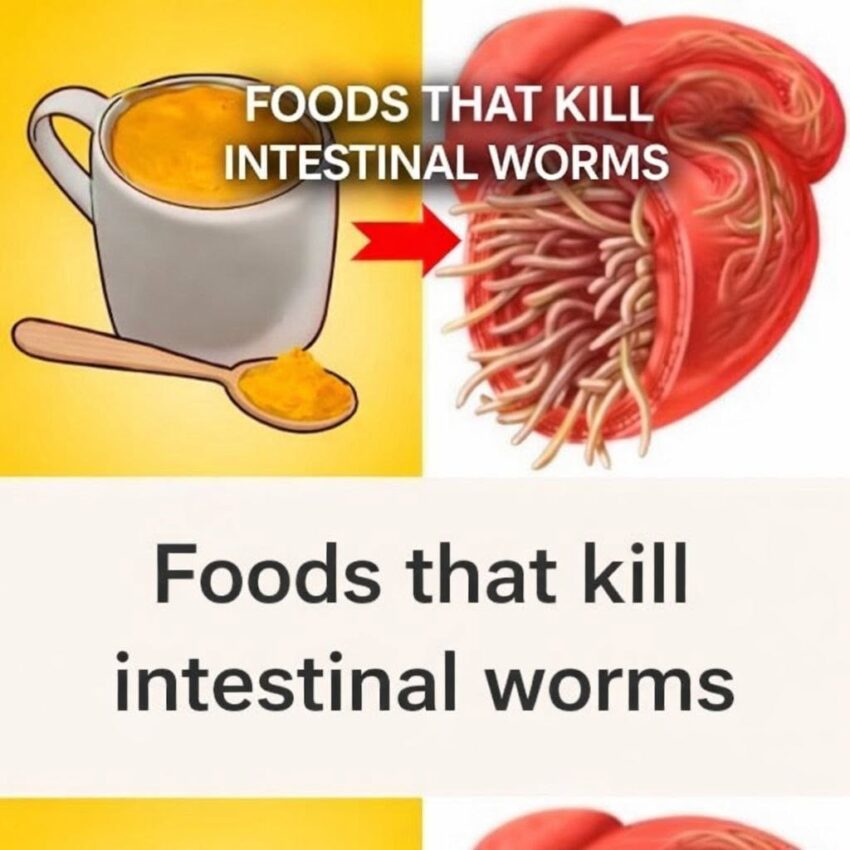
7 Foods Often Claimed to “Kill Intestinal Worms” — What the Evidence Says
Intestinal worms (parasitic infections) are caused by organisms such as roundworms, tapeworms, hookworms, and pinworms. While some foods contain compounds that may affect parasites in laboratory studies, foods alone are not a proven treatment for eliminating intestinal worms in humans. Confirmed infections usually require appropriate medical treatment.
That said, a healthy diet can support digestive and immune health.
1. Garlic
- Garlic contains compounds such as allicin that have shown antimicrobial activity in some studies.
- Eating garlic may support general health, but it should not replace proven deworming medication.
2. Pumpkin seeds
- Pumpkin seeds contain compounds that have been studied for possible antiparasitic effects.
- Evidence for treating human worm infections is limited.
3. Carrots
- High in fiber and nutrients that support normal bowel function.
- They do not directly “flush out” worms.
4. Papaya
- Papaya seeds and extracts have been studied for possible antiparasitic effects.
- More research is needed to know whether they reliably treat infections in people.
5. Ginger
- Ginger may support digestion and has anti-inflammatory properties.
- It is not a proven deworming treatment.
6. Coconut
- Some compounds in coconut products have shown antiparasitic activity in research settings.
- Eating coconut does not guarantee removal of intestinal worms.
7. Foods high in fiber
- Vegetables, fruits, beans, and whole grains support healthy bowel movements.
- Fiber may help overall gut health but does not kill parasites.
Signs that may suggest a worm infection:
- Persistent abdominal pain
- Unexplained weight loss
- Itching around the anus (especially at night)
- Diarrhea or digestive changes
- Visible worms or segments in stool
- Fatigue or weakness (in some infections)
What actually works:
- A healthcare professional can diagnose the type of parasite.
- Prescription or over-the-counter antiparasitic medicines (depending on the parasite and location) are the standard treatments.
- Good hygiene—handwashing, washing produce, and properly cooking meat—helps prevent reinfection.
If you suspect worms, it helps to know your symptoms, age, location, and whether you have seen worms in stool because different parasites require different treatments.
