Many foot problems are minor, but some symptoms can signal serious issues involving circulation, nerves, joints, infection, or even other parts of the body. Here are 9 foot symptoms you should never ignore and what they might mean:
- Persistent Foot Pain
- Could indicate: Stress fracture, arthritis, tendon injury, or nerve damage.
- If pain lasts more than a few days or worsens, it should be evaluated.
- Swelling That Doesn’t Go Away
- Could indicate: Injury, infection, poor circulation, heart failure, kidney disease, or a blood clot.
- Seek prompt medical attention if swelling is sudden, severe, or affects only one leg.
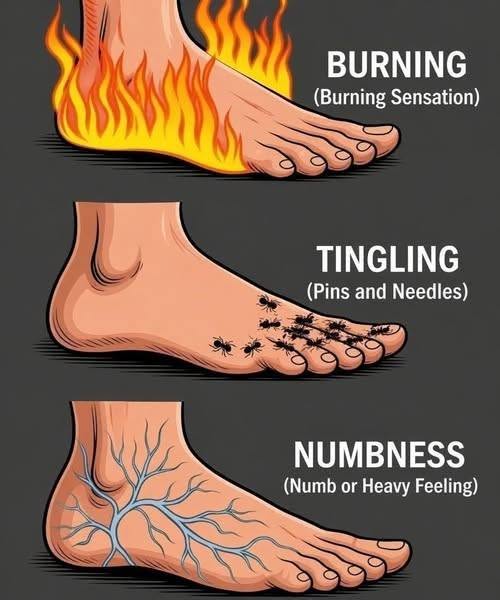
- Numbness or Tingling
- Could indicate: Nerve compression, Peripheral Neuropathy, or Type 2 Diabetes.
- Ongoing numbness increases the risk of unnoticed injuries.
- Open Sores or Wounds That Won’t Heal
- Could indicate: Diabetes-related complications, poor blood flow, or infection.
- This is especially urgent for people with diabetes.
- Changes in Skin Color
- Pale, blue, purple, or unusually red feet may indicate:
- Poor circulation
- Infection
- Inflammation
- Blood vessel problems
- Pale, blue, purple, or unusually red feet may indicate:
- Cold Feet (Not Due to Weather)
- Could indicate: Reduced blood flow, Peripheral Artery Disease, or thyroid disorders.
- Persistent coldness deserves medical evaluation.
- Sudden Foot Deformity or Loss of Arch
- Could indicate: Tendon rupture, severe arthritis, or a complication of diabetes called Charcot Foot.
- Early treatment can help prevent permanent damage.
- Severe Redness, Warmth, and Pain
- Could indicate:
- Infection
- Gout
- Cellulitis
- If accompanied by fever or rapidly spreading redness, seek urgent medical care.
- Could indicate:
- Black or Dark Areas on the Foot
- Could indicate: Tissue death (gangrene), severe infection, or critically reduced blood supply.
- This requires emergency medical evaluation.
When to seek immediate medical care
Go to an emergency department or seek urgent medical attention if you have:
- Sudden severe pain after an injury with inability to bear weight.
- A foot that becomes blue, pale, or black.
- A rapidly spreading infection, especially with fever.
- A deep wound, particularly if you have diabetes.
- Sudden swelling in one leg with pain or shortness of breath, as this could be related to a blood clot.
While many foot symptoms have harmless causes, persistent, worsening, or sudden changes should not be ignored. Early diagnosis often leads to simpler and more effective treatment.
