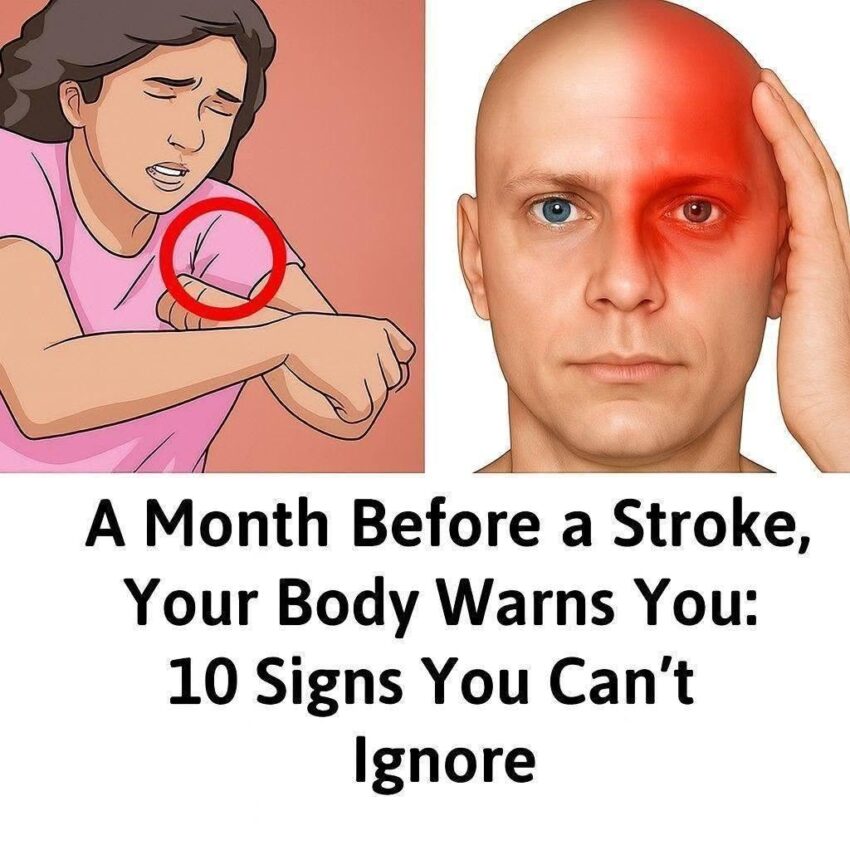
This headline is mostly misleading.
It suggests that the body reliably gives warning signs about a month before a stroke, but that is not supported by medical evidence. Many strokes occur without any warning symptoms.
What is true is that some people experience a transient ischemic attack (TIA) (“mini-stroke”) before a stroke. A TIA can occur minutes, hours, days, or sometimes weeks before a stroke, but it is not something everyone experiences, and there is no fixed “one month before” timeline.
Symptoms that require immediate medical attention
The warning signs of a TIA or stroke include:
- Sudden numbness or weakness of the face, arm, or leg, especially on one side
- Sudden confusion or trouble speaking or understanding speech
- Sudden vision loss or blurred vision in one or both eyes
- Sudden difficulty walking, dizziness, or loss of balance
- Sudden severe headache with no known cause
Even if these symptoms go away after a few minutes, they are an emergency because they may indicate a TIA.
What doesn’t reliably predict a stroke
Many videos and articles list symptoms such as:
- Fatigue
- Poor sleep
- Mild headaches
- Neck pain
- General dizziness
These symptoms are common and nonspecific. By themselves, they are not reliable indicators that a stroke will occur in the coming month.
Bottom line
- ❌ False: “Your body always warns you a month before a stroke.”
- ✅ True: Some people have a TIA before a stroke, and it should be treated as a medical emergency.
- ✅ The best ways to reduce stroke risk are controlling high blood pressure, managing diabetes and cholesterol, avoiding smoking, exercising regularly, and treating conditions such as atrial fibrillation when present.
If you or someone else develops sudden stroke symptoms, don’t wait to see if they improve—seek emergency medical care immediately.
