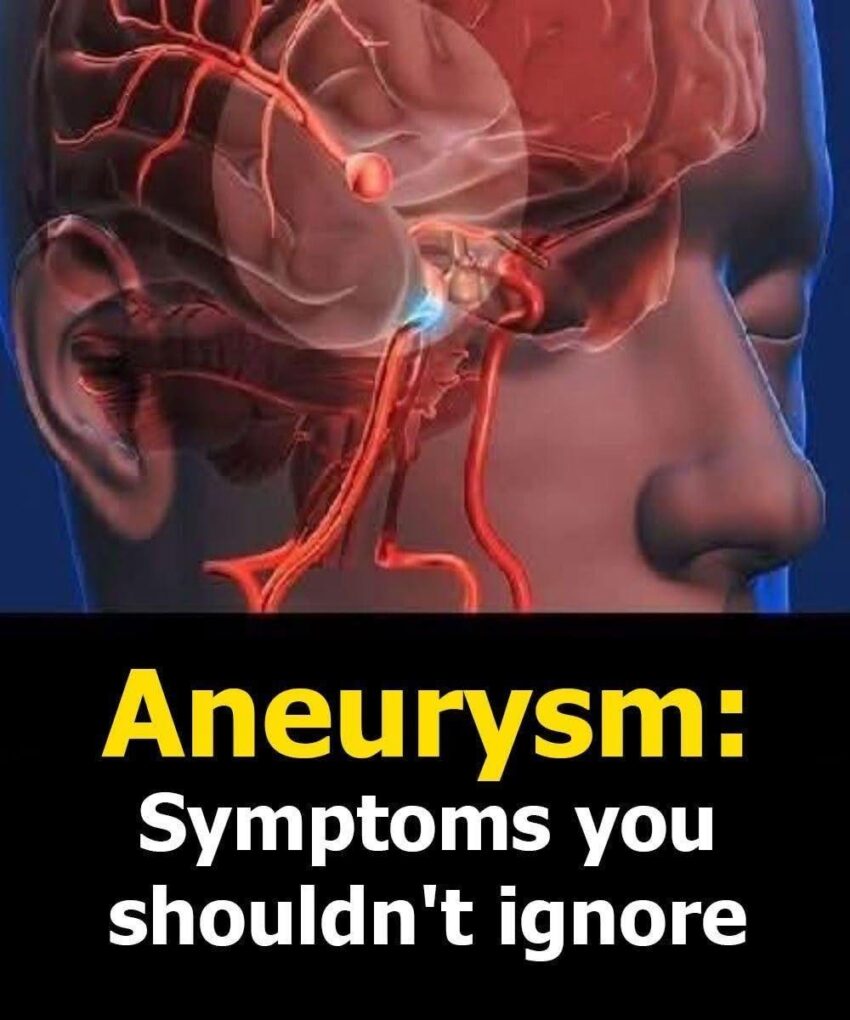
🧠 Aneurysm: Signs You Shouldn’t Ignore (Detailed, Clear Guide)
An Aneurysm happens when a blood vessel wall weakens and bulges outward like a balloon. The danger is that it can leak or rupture, causing life-threatening internal bleeding.
The problem is that many aneurysms have no symptoms until they become urgent, so knowing warning signs is very important.
There are different types:
- Brain (cerebral) aneurysm
- Aortic aneurysm (in chest or abdomen)
Each can show different warning signs.
🚨 GENERAL WARNING SIGNS (don’t ignore)
These can appear depending on location and size:
1. 🧠 Sudden, severe headache (“worst headache of life”)
Often linked to a brain aneurysm rupture or leak.
- Comes suddenly
- Extremely intense
- May be different from any normal headache
👉 This is a medical emergency.
2. 👁️ Vision changes
Possible signs of pressure from a brain aneurysm:
- Blurred vision
- Double vision
- Drooping eyelid
- Loss of vision in one eye
3. 🗣️ Speech or confusion changes
- Slurred speech
- Confusion or difficulty thinking
- Sudden trouble understanding others
4. 💪 Weakness or numbness
- One-sided weakness
- Facial drooping
- Numb arm or leg
👉 Can resemble a stroke.
5. ⚡ Sudden loss of consciousness
- Fainting
- Collapse without warning
This may indicate rupture and internal bleeding.
🫀 SIGNS OF ABDOMINAL OR AORTIC ANEURYSM
6. 🫀 Deep chest, back, or abdominal pain
Aortic aneurysm
- Sharp or tearing pain
- Pain in chest, back, or abdomen
- Pain that comes suddenly or persists
7. 💓 Pulsating feeling in abdomen
- Feeling a “heartbeat” in the stomach area
- Visible or palpable pulse in abdomen
8. 😮 Shortness of breath
- Especially if aneurysm affects chest area
- Can feel like pressure on lungs
9. 🧍 Dizziness or low blood pressure symptoms
- Lightheadedness
- Cold sweats
- Rapid heartbeat
👉 May indicate internal bleeding risk.
⚠️ WHEN IT BECOMES AN EMERGENCY
Call emergency services immediately if you notice:
- Sudden severe headache
- Collapse or fainting
- Sudden chest or back pain
- Sudden neurological symptoms (speech, vision, weakness)
These may indicate a ruptured aneurysm, which is life-threatening.
🧠 WHO IS AT HIGHER RISK?
Risk increases with:
- High blood pressure
- Smoking
- Family history of aneurysm
- Age over 50
- Certain genetic conditions
- Atherosclerosis (artery hardening)
🧪 WHY ANEURYSMS ARE DANGEROUS
The main risk is:
- The vessel wall becomes too weak
- Pressure causes rupture
- Internal bleeding occurs rapidly
Depending on location:
- Brain → stroke-like damage
- Aorta → massive internal bleeding
❌ COMMON MISCONCEPTION
Not all aneurysms:
- Hurt
- Cause symptoms early
- Are detectable without imaging
Many are found accidentally during scans.
📌 KEY TAKEAWAY
👉 Aneurysms often have no early warning signs
👉 When symptoms appear, they may be sudden and severe
👉 Key red flags include:
- Sudden severe headache
- Chest/back/abdominal tearing pain
- Vision, speech, or weakness changes
- Fainting or collapse
If you want, I can also explain:
- Early warning signs vs stroke (easy comparison)
- How aneurysms are diagnosed before rupture
- Or how to reduce risk through lifestyle and blood pressure control
