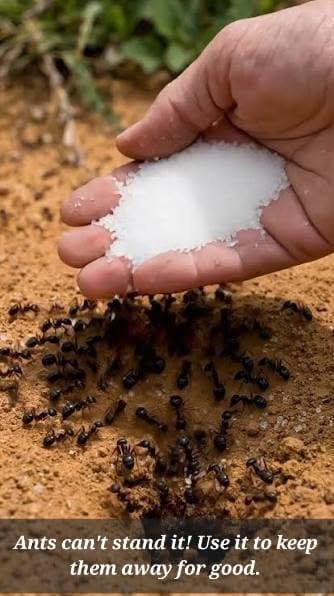
Ants Can’t Stand It! Use It to Keep Them Away for Good — What Really Works?
Headlines like “Ants can’t stand it! Use it to keep them away for good” often refer to household ingredients such as vinegar, cinnamon, coffee grounds, peppermint oil, or other natural remedies. Some of these may temporarily discourage ants, but there is usually no single ingredient that will permanently eliminate an ant problem.
The most effective approach is to understand why ants enter your home and how to remove the conditions attracting them.
Why Do Ants Come Inside?
Ants usually enter homes looking for:
- Food sources (especially sugar, crumbs, grease, and pet food)
- Water or moisture
- Shelter from weather changes
- Safe nesting locations
Once a worker ant finds food, it leaves a pheromone trail that guides other ants from the colony to the same location.
That is why killing only the visible ants often does not solve the problem—the colony remains.
Common Natural Methods People Use
1. White vinegar
How it works:
Vinegar’s strong smell can interfere with the scent trails ants use to navigate.
How to use:
- Mix equal parts vinegar and water.
- Spray along:
- Door frames
- Window edges
- Countertops
- Ant trails
Limitations:
- It does not usually kill the colony.
- Ants may return once the smell disappears.
- Avoid spraying vinegar on some natural stone surfaces because it can damage them.
2. Cinnamon
Many people use cinnamon as an ant deterrent.
Why it may help:
Strong smells may interfere with ants’ ability to follow trails.
Limitations:
- It is mainly a temporary barrier.
- It does not remove the nest.
3. Peppermint Oil
Peppermint oil is another popular option.
Possible effect:
The strong scent may discourage ants from crossing treated areas.
How to use:
- Add a few drops to water in a spray bottle.
- Apply around entry points.
Caution:
Essential oils can irritate pets or children if used improperly, and they should not be applied directly to skin without proper dilution.
4. Diatomaceous Earth
Diatomaceous earth is sometimes used for insect control.
How it works:
Food-grade diatomaceous earth can damage the protective outer layer of some insects, causing dehydration.
Important:
- Use only food-grade products for household use.
- Avoid breathing the dust.
- Keep away from areas where children or pets can disturb it.
What Actually Works Best for Long-Term Ant Control?
1. Remove Food Sources
Clean:
- Countertops
- Floors
- Cabinets
- Pet feeding areas
Store:
- Sugar
- Flour
- Cereals
- Snacks
in sealed containers.
2. Seal Entry Points
Check and seal:
- Cracks around windows
- Gaps under doors
- Openings around pipes
- Wall gaps
Ants can enter through surprisingly tiny spaces.
3. Follow the Ant Trail
Instead of only spraying visible ants:
- Watch where they travel.
- Find possible entry points.
- Clean the trail to remove pheromone signals.
- Address the nest or colony.
4. Use Ant Baits for Colony Control
Ant baits work differently from sprays.
Worker ants carry bait back to the colony, where it can affect other ants, including the queen.
This approach often works better for eliminating an infestation than simply killing visible ants.
Things That Often Don’t Work Well
Spraying Individual Ants
It may kill the ants you see, but:
- The colony remains.
- More workers replace them.
Strong Smells Alone
Ingredients like:
- Lemon
- Cinnamon
- Coffee grounds
- Vinegar
may repel ants temporarily but rarely solve the underlying problem.
Prevention Tips
- Wipe spills immediately.
- Keep food sealed.
- Empty trash regularly.
- Fix leaking faucets.
- Keep pet food areas clean.
- Trim plants touching the house, as some ants use them as pathways.
Key Takeaway
There is no guaranteed “magic ingredient” that keeps ants away forever. Natural deterrents such as vinegar, cinnamon, or peppermint oil may help temporarily, but lasting control usually requires a combination of:
✅ Removing food and water sources
✅ Blocking entry points
✅ Cleaning pheromone trails
✅ Treating the colony when necessary
Understanding ant behavior is usually more effective than relying on a single home remedy.
