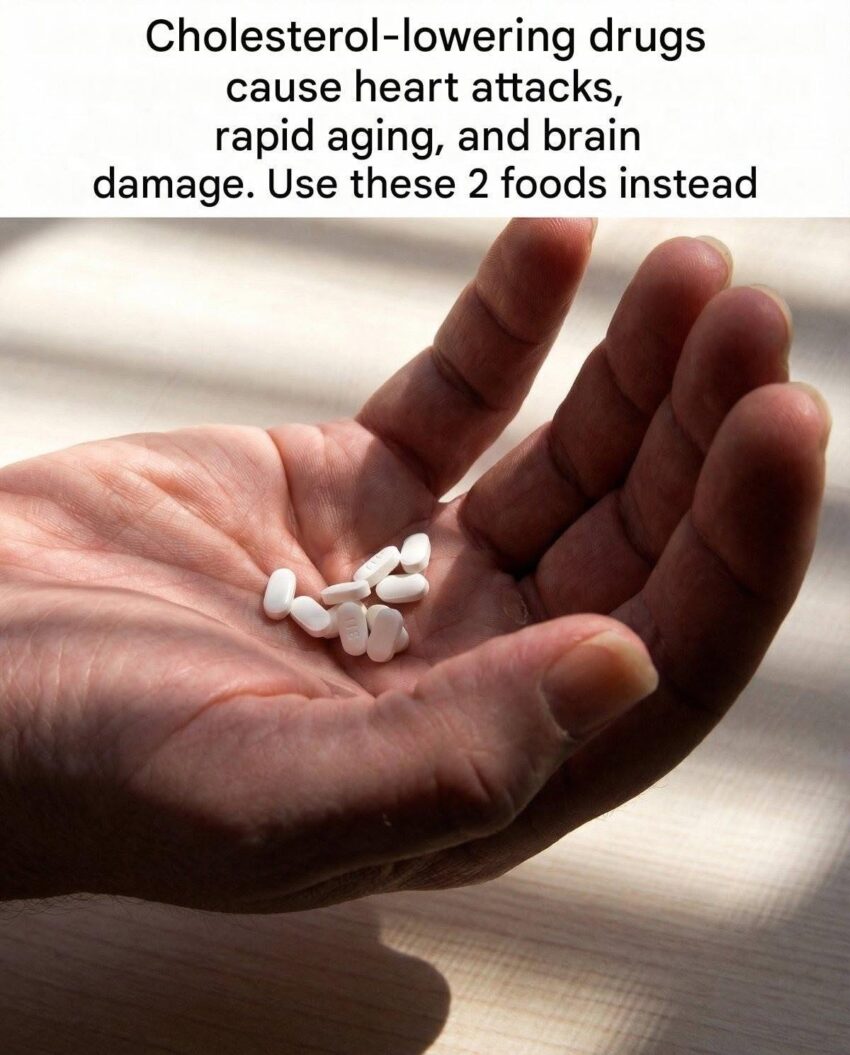
Claims that “cholesterol-lowering drugs cause heart attacks, rapid aging, and brain damage” are misleading. Cholesterol-lowering medicines—especially statins such as atorvastatin and simvastatin—have been studied extensively and are proven to reduce the risk of heart attacks and strokes in many people who are at elevated cardiovascular risk.
Like all medicines, statins can have side effects. Some people experience muscle aches, digestive symptoms, or small changes in blood sugar. Reports of memory problems are uncommon, and large studies have not shown that statins cause widespread permanent brain damage.
Foods that can support healthier cholesterol levels
No food can replace a needed cholesterol medication, but certain foods can help improve cholesterol as part of an overall heart-healthy diet:
1. Oats and other high-fiber foods
- Oats contain beta-glucan, a type of soluble fiber that can help reduce LDL (“bad”) cholesterol.
- Other sources include barley, beans, lentils, fruits, and vegetables.
2. Nuts (such as almonds and walnuts)
- Nuts provide unsaturated fats, fiber, and plant compounds that may support healthier cholesterol levels.
- Portion size matters because nuts are calorie-dense.
Other heart-supportive choices:
- Fatty fish (such as salmon or sardines)
- Olive oil and other unsaturated fats
- Beans and legumes
- Vegetables and fruits
- Whole grains
If you take cholesterol medication:
- Do not stop it suddenly or replace it with foods without discussing it with your healthcare professional.
- The best approach depends on your LDL level, age, medical history, diabetes status, blood pressure, and heart disease risk.
If you’re concerned about a cholesterol medicine, tell me which drug and dose you take and what worries you (for example, muscle pain, memory concerns, or another symptom). I can help separate common concerns from risks that need medical attention.
