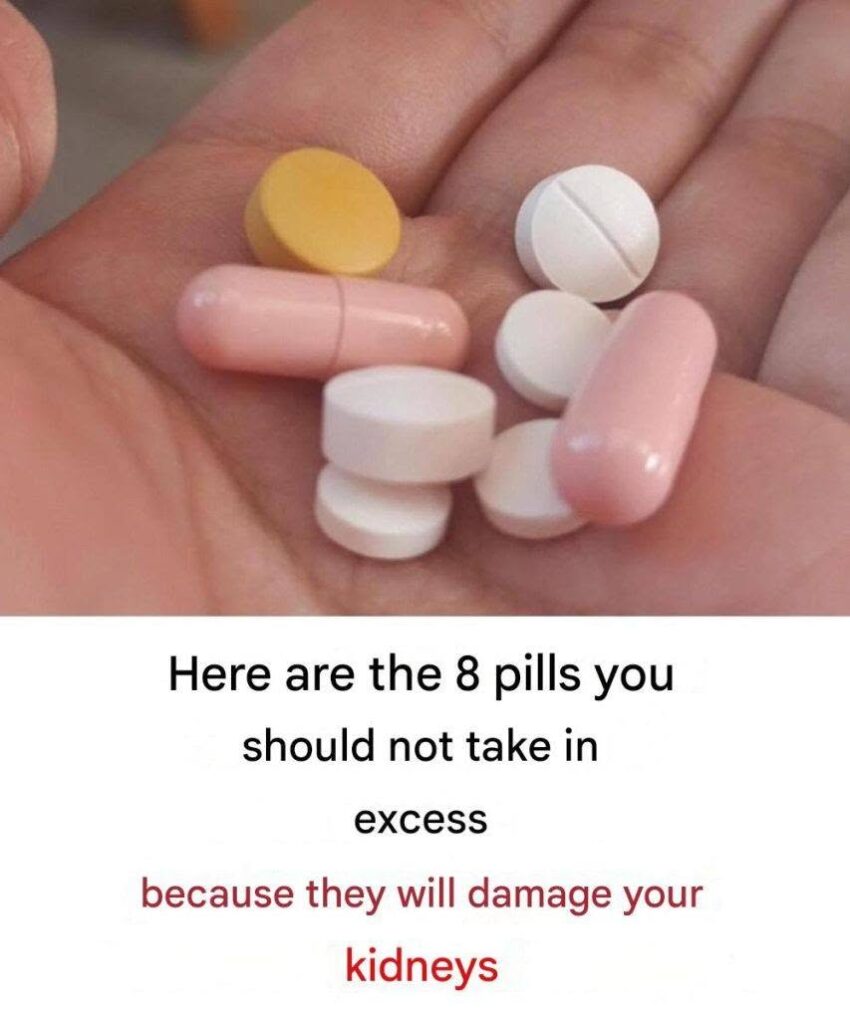
The headline “Eight pills you shouldn’t take because they damage your kidneys” is oversimplified and potentially misleading.
It is true that some medicines can affect kidney function, especially in people who already have kidney disease, are dehydrated, take high doses, or combine certain medications. However, it is not accurate to say that there are simply “eight pills everyone should avoid.” Many medications are safe and beneficial when used correctly and monitored appropriately.
Examples of medicines that can be associated with kidney problems in certain situations include:
- Nonsteroidal anti-inflammatory drugs (NSAIDs)
Examples include ibuprofen and naproxen. Long-term use or high doses can reduce blood flow to the kidneys and may increase risk, especially in older adults or people with kidney disease. - Certain antibiotics
Some antibiotics can affect kidney function, particularly in vulnerable patients or at higher doses. - Some blood pressure medicines
Drugs that affect the kidney’s blood-flow regulation may require monitoring of kidney function and potassium levels. - Certain diuretics (“water pills”)
They can contribute to dehydration or electrolyte problems if not appropriately managed. - Some acid-reducing medicines
Certain long-term users of some proton pump inhibitors have been studied for possible associations with kidney problems, though the relationship is complex. - Certain antiviral or chemotherapy medicines
Some can be toxic to the kidneys and require careful dosing and monitoring. - Lithium
Long-term use can affect kidney function in some patients and requires regular monitoring. - Some contrast agents used in medical imaging
These are not everyday pills, but certain contrast exposures can pose kidney risks in high-risk patients.
Important: Do not stop prescribed medications because of a list from the internet. Stopping some medicines suddenly can be dangerous. If you are concerned about kidney health, a healthcare professional can review your medications and check tests such as creatinine/eGFR and urine protein levels.
Bottom line: The real message is not “avoid eight pills”; it is use certain medications carefully, at the right dose, with appropriate monitoring—especially if you have kidney disease or other risk factors.
