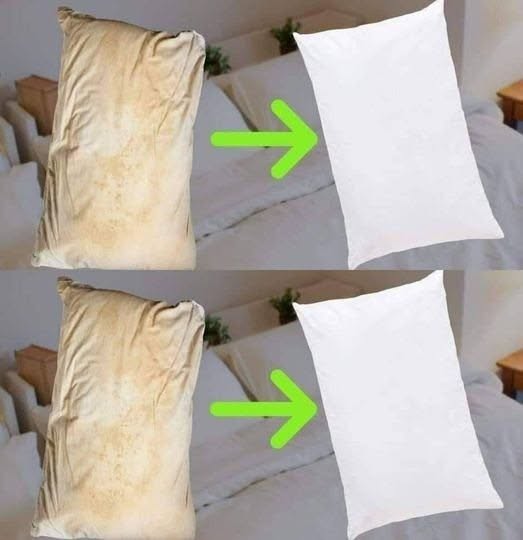
Dirty bed pillows can collect sweat, body oils, dust, dead skin cells, and dust mites over time, causing them to become yellowed and develop unpleasant odors. Fortunately, many pillows can be cleaned at home to restore their freshness and improve their appearance. The cleaning method depends on the pillow’s filling, so always check the care label before washing.
Why Pillows Become Yellow
Yellow stains on pillows are typically caused by a combination of:
- Sweat and body oils
- Saliva
- Hair products and facial creams
- Moisture and humidity
- Dust and everyday use
Regular washing every 3–6 months, along with using pillow protectors, can help prevent staining and extend the life of your pillows.
Before You Start
Check the care label to determine whether your pillow is:
- Machine washable (common for polyester and many down or feather pillows)
- Spot clean only
- Dry clean only
- Made of memory foam or latex (these generally should not be machine washed)
Method 1: Washing Machine (For Machine-Washable Pillows)
You’ll Need
- Mild laundry detergent
- Warm water (if permitted by the care label)
- White vinegar (optional, to help reduce odors)
- Baking soda (optional, for deodorizing)
Instructions
- Remove pillowcases and any protective covers.
- Place two pillows in the washing machine if possible to help balance the load.
- Add the recommended amount of detergent.
- If desired, add ½ cup of white vinegar during the rinse cycle to help remove lingering odors.
- Run an extra rinse cycle to help remove detergent residue.
- Spin thoroughly to remove as much water as possible.
Drying the Pillows
Proper drying is essential to prevent mildew.
- Tumble dry on low heat if the care label allows.
- Add two or three clean tennis balls or dryer balls to help fluff the pillows and prevent clumping.
- Pause occasionally to redistribute the filling if needed.
- Ensure the pillows are completely dry before using them.
Method 2: Brightening Yellowed White Pillows
If white pillows have noticeable yellowing, you can try soaking them before washing.
Prepare a basin or tub with warm water and add:
- Laundry detergent
- An oxygen-based bleach (follow the product instructions)
Soak according to the product directions, then wash the pillows as usual.
Avoid using chlorine bleach unless the care label specifically permits it, as it can damage some fabrics and fillings and may actually make protein-based stains appear more yellow over time.
Method 3: Cleaning Memory Foam or Latex Pillows
Memory foam and latex pillows should generally not be submerged in water or machine washed.
Instead:
- Vacuum the pillow using an upholstery attachment.
- Spot clean stains with a cloth dampened with water and a small amount of mild detergent.
- Blot with a clean damp cloth to remove soap.
- Allow the pillow to air dry completely in a well-ventilated area, away from direct heat.
Freshening Between Washes
To help keep pillows smelling fresh:
- Wash pillowcases weekly.
- Use zippered pillow protectors.
- Air pillows outdoors on a dry day.
- Sprinkle a light layer of baking soda over the pillow, let it sit for 30–60 minutes, then vacuum it off (if appropriate for the pillow type).
How Often Should You Wash Pillows?
A good maintenance schedule is:
- Pillowcases: Every 1–2 weeks
- Pillow protectors: Every month
- Pillows: Every 3–6 months
When to Replace a Pillow
Even with regular cleaning, pillows do not last forever. Consider replacing them if:
- They remain stained or have persistent odors after cleaning.
- The filling has become lumpy or flattened.
- They no longer provide adequate support.
- The pillow is several years old and no longer comfortable.
As a general guideline, many synthetic pillows last about 1–2 years, while down and feather pillows may last longer with proper care.
Tips for Long-Lasting Freshness
- Always let pillows dry completely after washing.
- Avoid overloading the washing machine.
- Follow the manufacturer’s care instructions for your specific pillow.
- Using pillow protectors can significantly reduce staining and help pillows stay cleaner between washes.
With routine care and the appropriate cleaning method for the pillow’s material, many pillows can be refreshed, deodorized, and kept in good condition for much longer.
