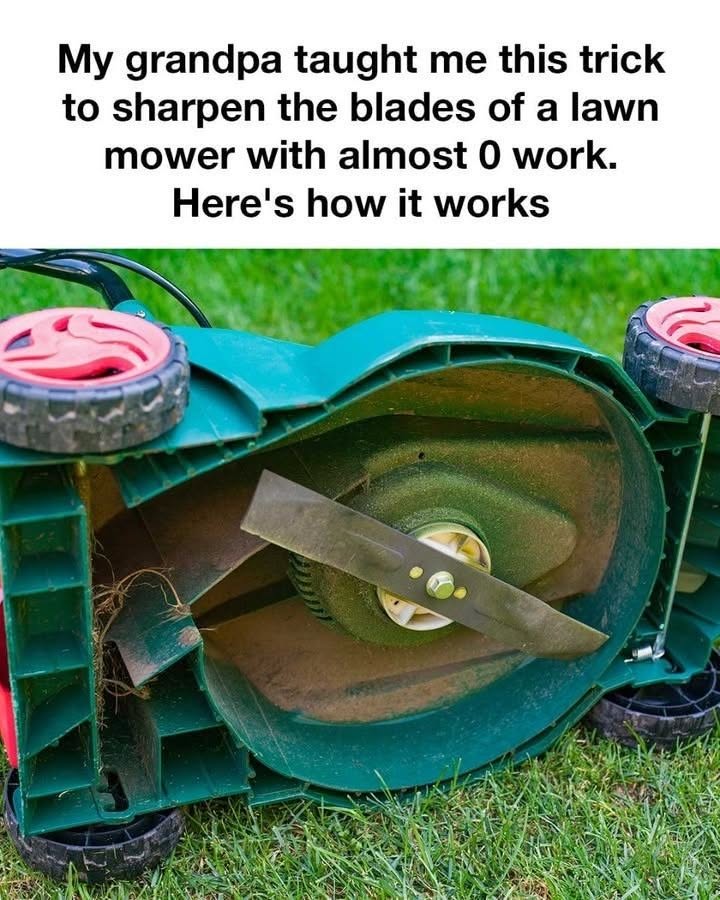
My Grandpa Taught Me This Trick to Sharpen Lawn Mower Blades With Almost 0 Work — Here’s How It Works
A popular “grandpa trick” for lawn mower blades involves using a blade-sharpening attachment, a drill-powered sharpening tool, or sometimes a sharpening stone/disc method to restore the cutting edge quickly. These methods can reduce effort, but there is no completely effortless way to restore a badly damaged blade.
A sharp mower blade is important because it cuts grass cleanly instead of tearing it, which helps keep your lawn healthier.
Why Lawn Mower Blades Become Dull
Over time, mower blades hit:
- Rocks
- Sticks
- Soil
- Sand
- Thick grass
- Hidden debris
This causes the cutting edge to become:
- Rounded
- Nicked
- Uneven
- Blunt
A dull blade often produces:
- Torn grass tips
- Brown or ragged-looking lawns
- Uneven cutting
- Longer mowing time
- Extra stress on the mower engine
The “Almost No Work” Sharpening Method
One commonly shared shortcut is using a blade sharpening drill attachment.
What You Need
- A drill
- A mower blade sharpening attachment (often a small grinding stone or abrasive wheel designed for blades)
- Safety glasses
- Gloves
- A wrench for removing the blade
Step-by-Step Process
1. Safety First
Before working on the mower:
- Turn off the engine.
- Disconnect the spark plug wire (for gas mowers).
- Remove the battery (for electric models).
- Make sure the blade cannot accidentally move.
Never sharpen a blade while it is still attached to a running mower.
2. Remove the Blade
Tilt the mower safely.
Before removing the blade:
- Mark which side faces upward.
- Hold the blade securely.
- Remove the center bolt.
A common mistake is reinstalling the blade upside down.
3. Secure the Blade
Place the blade in a vise or clamp.
A stable blade is safer and allows a more even sharpening angle.
4. Use the Sharpening Tool
The attachment follows the existing angle of the blade edge.
Move it along the cutting edge with smooth strokes.
The goal is not to remove a large amount of metal—you are only restoring the sharp edge.
5. Balance the Blade
This step is often skipped but is important.
An unbalanced blade can cause:
- Vibration
- Excess wear on mower parts
- Uneven cutting
A simple test:
- Hang the blade on a nail or blade balancer.
- If one side drops lower, remove a small amount of metal from the heavier side.
6. Reinstall the Blade
Make sure:
- The blade is facing the correct direction.
- The bolt is tightened properly.
- All safety equipment is back in place.
Does the “No Work” Trick Really Sharpen Blades?
It depends on the condition of the blade.
Works well for:
✅ Slightly dull blades
✅ Regular maintenance
✅ Small nicks
May not be enough for:
❌ Deep cracks
❌ Severely bent blades
❌ Large missing sections
❌ Heavy rust damage
A badly damaged blade may need professional sharpening or replacement.
How Often Should You Sharpen a Lawn Mower Blade?
A general guideline:
- Every 20–25 hours of mowing
- At least once or twice per mowing season for many homeowners
You may need more frequent sharpening if you mow:
- Sandy soil
- Rough terrain
- Large areas
- Areas with sticks or debris
Signs Your Blade Needs Sharpening
Look for:
1. Grass Tips Look Torn
A sharp blade cuts cleanly. A dull blade rips grass, leaving ragged edges.
2. Brown Grass After Mowing
Damaged grass tips can dry out and turn brown.
3. Uneven Cutting
The mower may leave strips or patches of taller grass.
4. More Effort Required
The mower may struggle more than usual.
Common Mistakes to Avoid
Sharpening at the Wrong Angle
Most mower blades have a specific cutting angle. Changing it too much can reduce cutting performance.
Making the Blade Razor Sharp
A mower blade does not need to be knife-sharp. A slightly durable edge lasts longer.
Removing Too Much Metal
Over-sharpening can weaken the blade.
Ignoring Balance
An unbalanced blade can damage the mower.
Alternative Simple Methods
File Sharpening
A metal file can work well for light sharpening.
Advantages:
- Cheap
- Controlled
- No electricity needed
Disadvantage:
- Takes more time
Bench Grinder
A grinder is faster for heavily dulled blades.
Advantages:
- Quick
- Effective
Disadvantage:
- Easier to remove too much metal if you’re inexperienced.
Key Takeaway
The “grandpa trick” of using a quick sharpening tool can make lawn mower blade maintenance much easier, especially for blades that are only slightly dull. However, the best results still require proper safety, maintaining the correct cutting angle, and balancing the blade afterward. A few minutes of regular maintenance can improve cutting quality and extend the life of your mower.
