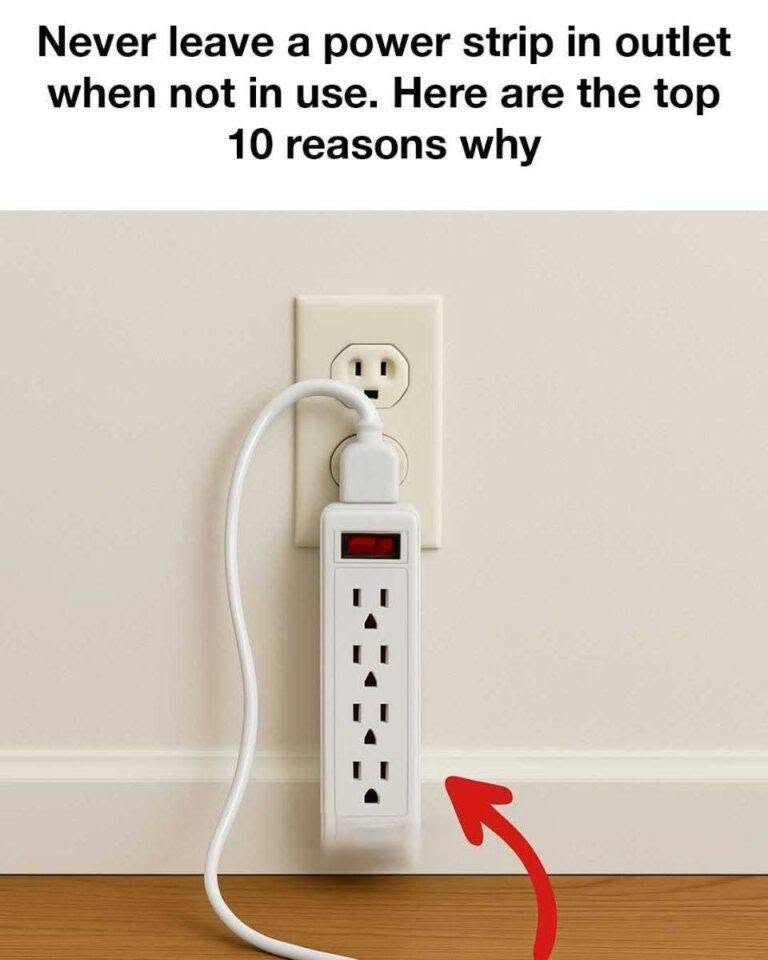
The claim “never leave a power strip plugged in when not in use” is partly exaggerated, but it contains a real safety message. A power strip (extension board) does not automatically become dangerous just because it is plugged in—but certain conditions can make it risky, especially with low-quality or overloaded units.
Let’s break it down properly.
⚡ Top Reasons People Say to Unplug a Power Strip
1. Fire risk from overload
Power strips can overheat if:
- Too many devices are plugged in
- High-wattage appliances are used (heater, iron, kettle)
- The strip is cheap or poorly made
👉 Overheating is one of the main real dangers.
2. Standby power waste (small but real)
Even when devices are “off,” some still draw electricity:
- TVs
- Chargers
- Set-top boxes
👉 This is called phantom load, and it can slightly increase your electricity bill over time.
3. Electrical surges
Power strips (especially without surge protection) can be damaged by:
- Lightning strikes
- Power fluctuations
- Grid switching
👉 This can damage connected devices.
4. Aging or worn-out strips
Over time, power strips can:
- Loosen internally
- Develop damaged wiring
- Become brittle or cracked
👉 Old strips are more likely to fail silently.
5. Overloaded extension chains
A dangerous habit is plugging:
- Power strip into another power strip
- Multiple extensions in series
👉 This increases fire risk significantly.
6. Heat buildup in enclosed spaces
Power strips placed:
- Under carpets
- Behind furniture
- Inside cabinets
can trap heat and increase fire risk.
7. Faulty or cheap manufacturing
Low-quality strips may lack:
- Proper insulation
- Grounding
- Overload protection
👉 These are more likely to fail under normal use.
8. Plug wear and loose connections
Leaving strips plugged in constantly can:
- Loosen wall socket grip over time
- Cause sparking or arcing
9. Moisture exposure risk
In kitchens, bathrooms, or damp areas:
- Moisture can enter sockets
- This increases risk of electric shock or short circuits
10. Fire spread risk during unattended use
If a fault occurs while no one is home:
- Small electrical faults can escalate unnoticed
- Fire may spread before detection
⚠️ Important Reality Check
Unplugging a power strip every time is:
✔ Helpful in some situations
❌ Not always necessary
❌ Not a universal safety rule
Modern power strips are designed to stay plugged in safely when used correctly.
🛡️ When You SHOULD unplug a power strip
You should unplug it when:
- Going on vacation or leaving home for days
- Not using it for a long period
- It feels hot or smells odd
- You are using high-power devices
- There is a storm or frequent power surges
🧠 When it is SAFE to leave plugged in
It is generally safe if:
- It is high-quality and certified
- It is not overloaded
- It is placed in a ventilated area
- It is used for low-power devices (chargers, lamps, routers)
🔥 Better safety habits than unplugging alone
Instead of constantly unplugging, focus on:
✔ Use surge-protected strips
Protects against voltage spikes.
✔ Avoid overloading
Check watt limits.
✔ Replace old strips
Every few years or if damaged.
✔ Keep dry and ventilated
No carpets or tight enclosures.
✔ Turn off switches on the strip
Many strips have individual power switches.
🧾 Bottom line
The idea that you should always unplug a power strip when not in use is an oversimplification.
✔ Unplugging can improve safety in certain situations
✔ Most risks come from overload, poor quality, or misuse
❌ A properly used power strip is designed to stay plugged in safely
👉 The real key is not constant unplugging—but safe usage, quality equipment, and avoiding overloads.
If you want, I can give you a “home electrical safety checklist” that actually prevents 90% of fire risks from plugs and appliances.
