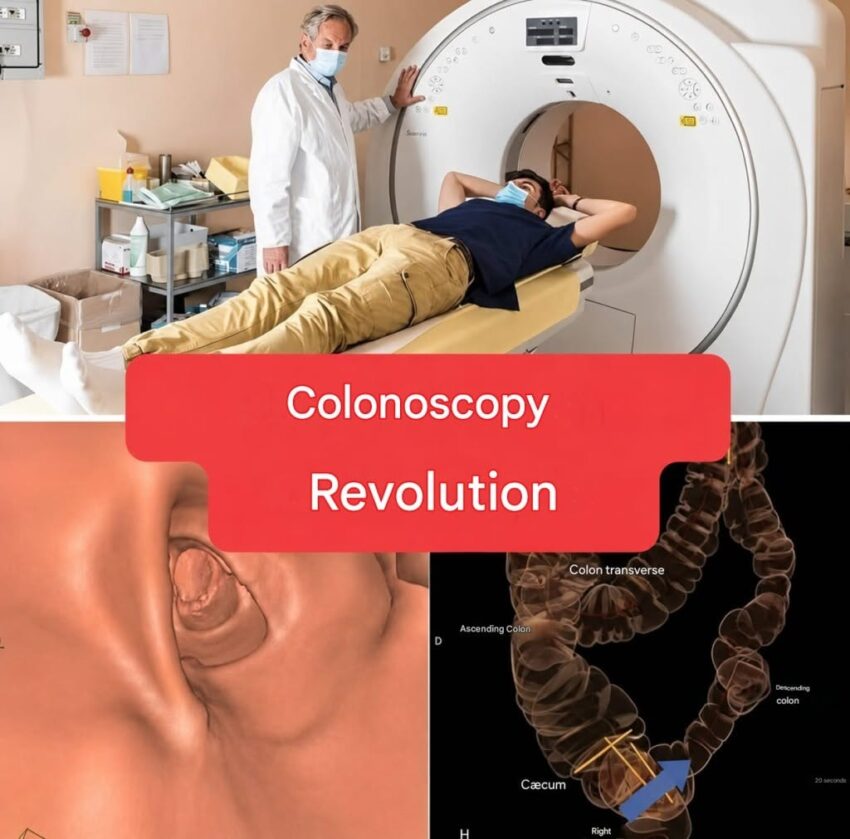
The claim “New method: colonoscopy will no longer be an invasive examination” is partly true but misleading if presented as a complete replacement.
Several less-invasive technologies are being developed or are already available, but none has fully replaced conventional colonoscopy in most situations.
Examples include:
- Capsule endoscopy (“pill camera”): You swallow a small capsule with a camera that takes pictures as it travels through your digestive tract. It is less invasive, but if it detects suspicious polyps, you usually still need a conventional colonoscopy to remove them or take biopsies.
- CT colonography (“virtual colonoscopy”): Uses CT scans to create images of the colon. It is less invasive than a standard colonoscopy but still requires bowel preparation, and abnormal findings generally require a follow-up colonoscopy.
- Stool-based screening tests: Tests such as fecal immunochemical tests (FIT) and stool DNA tests are non-invasive screening options. However, a positive result typically needs to be confirmed with a colonoscopy.
A conventional colonoscopy remains the gold standard because it allows the doctor to:
- Directly examine the lining of the colon.
- Remove polyps during the same procedure.
- Take tissue samples (biopsies) if needed.
So, while newer methods are making colorectal cancer screening more comfortable and accessible for many people, it is not accurate to say that colonoscopy has become obsolete or that invasive examinations are no longer needed. Often, the newer tests are used for screening, while conventional colonoscopy is still required when abnormalities are found.
