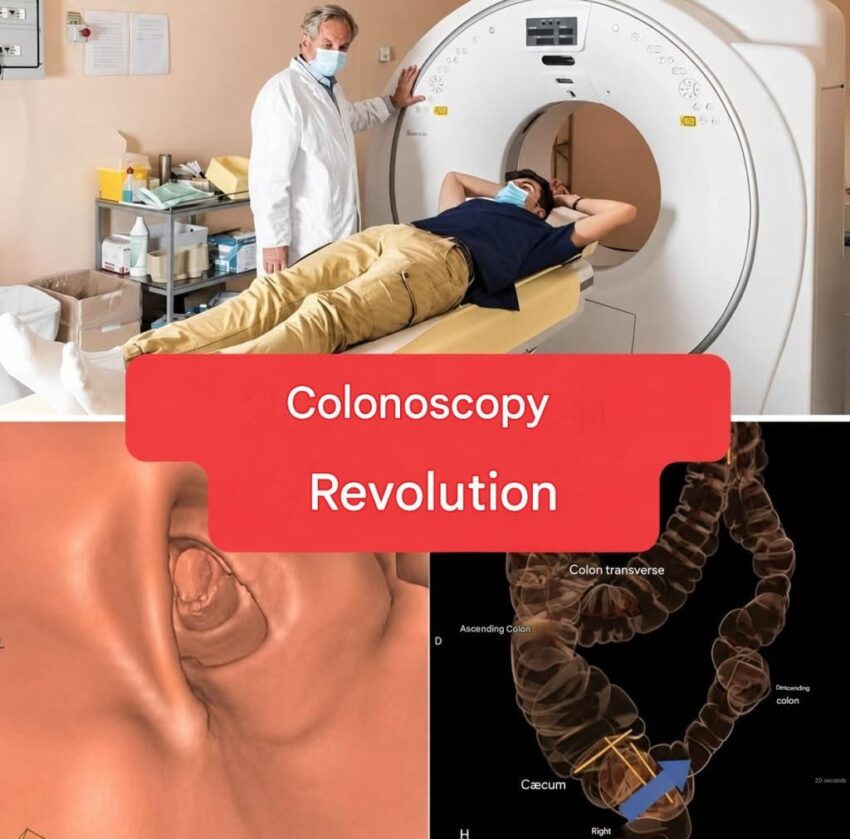
New Method: Could Colonoscopy Soon Become Less Invasive?
For many people, the thought of a colonoscopy can be intimidating. Although it remains the gold standard for detecting colorectal cancer and removing precancerous polyps, researchers are developing new technologies that may make screening easier, more comfortable, and less invasive in the future.
While these advances are promising, traditional colonoscopy is still the most accurate test for many people, especially those at high risk or with abnormal screening results.
1. Capsule Endoscopy (“Camera Pill”)
One of the most exciting developments is the capsule endoscope—a vitamin-sized capsule containing a tiny camera.
How it works:
- The patient swallows the capsule with water.
- As it travels through the digestive tract, it takes thousands of images.
- The images are transmitted to a recorder worn on the body.
- The capsule is naturally passed in the stool.
Advantages:
- No sedation
- No insertion of a long scope
- Minimal discomfort
Limitations:
If an abnormality is found, a standard colonoscopy is usually still needed to remove polyps or collect tissue samples.
2. CT Colonography (Virtual Colonoscopy)
A CT colonography uses specialized CT scans to create detailed images of the colon.
Benefits:
- Less invasive than a traditional colonoscopy
- No sedation is usually required
- The procedure is relatively quick
Limitations:
- Bowel preparation is still required.
- Air or carbon dioxide is introduced into the colon for imaging.
- If polyps are detected, a traditional colonoscopy is needed for removal.
3. Stool-Based Screening Tests
Several at-home screening tests can detect signs of colorectal cancer without a procedure.
These tests may look for:
- Hidden blood in the stool
- Abnormal DNA shed by colon polyps or cancers
Advantages:
- Convenient
- Non-invasive
- Can often be completed at home
Important:
A positive result must be followed by a diagnostic colonoscopy.
Why Traditional Colonoscopy Is Still Important
A conventional colonoscopy allows doctors to:
- View the entire colon directly
- Remove precancerous polyps during the same procedure
- Take biopsies if needed
This makes it both a screening and treatment tool.
Who Should Be Screened?
Screening recommendations vary depending on:
- Age
- Family history
- Personal medical history
- Individual risk factors
Talk with your healthcare provider about which screening option is most appropriate for you.
Bottom Line
New technologies such as capsule endoscopy, CT colonography, and stool-based screening tests are making colorectal cancer screening more accessible and less invasive for many people. However, traditional colonoscopy remains the most comprehensive test because it can both detect and remove abnormal growths during the same procedure. As research continues, future screening methods may become even more comfortable while maintaining high accuracy.
