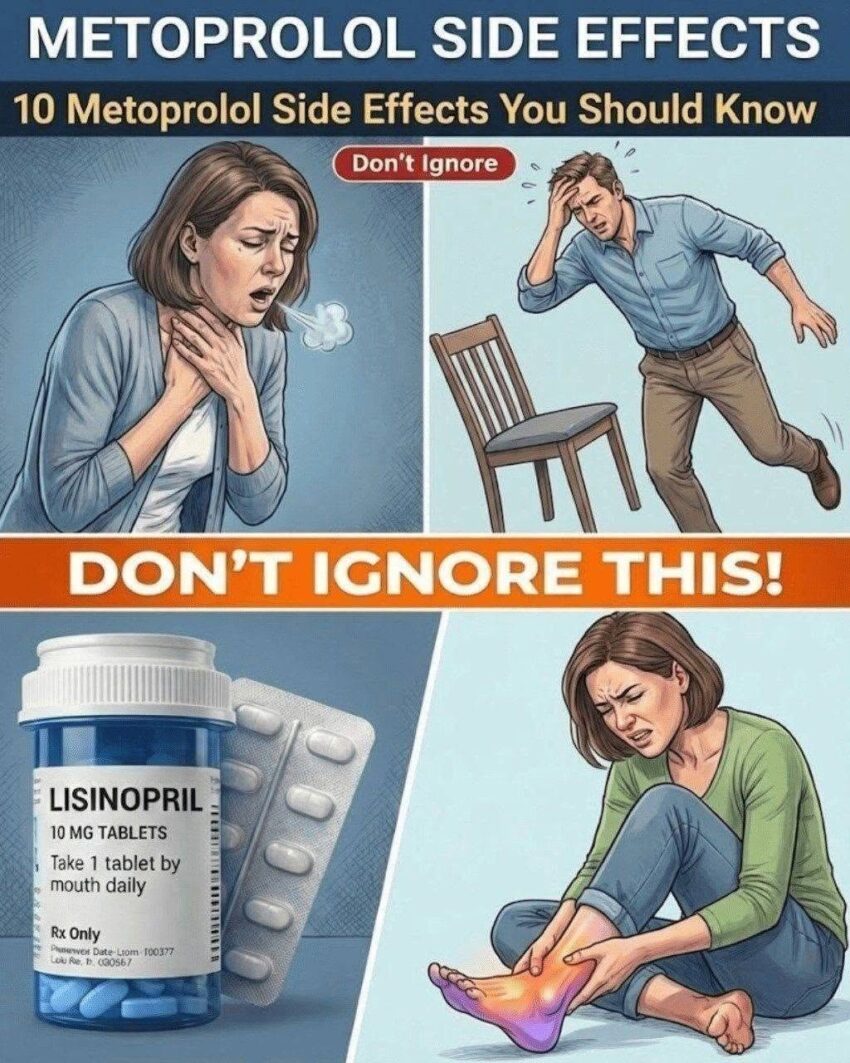
10 Possible Side Effects of Metoprolol You Should Know
Metoprolol is a prescription beta-blocker commonly used to treat high blood pressure, chest pain (angina), heart failure, and certain heart rhythm disorders. It is effective for many people, but like all medications, it can cause side effects. Most are mild and manageable, while others require prompt medical attention.
Important: Do not stop taking metoprolol suddenly without your doctor’s advice. Abruptly stopping it can worsen chest pain, trigger abnormal heart rhythms, or increase the risk of a heart attack.
1. Fatigue or Low Energy
One of the most common side effects is feeling:
- Tired
- Sluggish
- Less energetic than usual
This often improves after your body adjusts to the medication over a few weeks.
2. Slow Heart Rate (Bradycardia)
Metoprolol works by slowing the heart, but sometimes it can slow it too much.
Symptoms may include:
- Dizziness
- Lightheadedness
- Feeling faint
- Unusual weakness
If you develop severe symptoms or faint, seek medical attention promptly.
3. Dizziness or Lightheadedness
Because metoprolol lowers blood pressure, some people experience dizziness, especially:
- When standing up quickly
- During the first few days of treatment
- After a dose increase
Getting up slowly from sitting or lying down may help.
4. Cold Hands and Feet
Reduced blood flow to the extremities may cause:
- Cold fingers
- Cold toes
- Tingling in some people
This is usually mild but can be more noticeable in cold weather.
5. Shortness of Breath or Wheezing
Although metoprolol is more selective for the heart than some older beta-blockers, it can still affect breathing in some people.
This is especially important for people with:
- Asthma
- Chronic obstructive pulmonary disease (COPD)
Seek medical advice if you develop new or worsening breathing problems.
6. Digestive Problems
Some people experience:
- Nausea
- Diarrhea
- Constipation
- Stomach discomfort
Taking metoprolol with food may reduce stomach upset.
7. Sleep Changes
Some users report:
- Trouble sleeping
- Vivid dreams
- Nightmares
These effects are not common but can occur.
8. Sexual Side Effects
Some people may notice:
- Reduced libido
- Difficulty achieving or maintaining an erection
- Sexual performance changes
If this becomes bothersome, speak with your healthcare provider. There may be treatment options or alternative medications.
9. Mood Changes
Less commonly, people report:
- Depression
- Low mood
- Reduced motivation
If you notice significant changes in mood or thoughts, contact your healthcare provider.
10. Low Blood Pressure (Hypotension)
If blood pressure drops too much, symptoms can include:
- Severe dizziness
- Blurred vision
- Fainting
- Confusion
This is more likely if metoprolol is combined with other blood pressure-lowering medications.
When to Seek Immediate Medical Care
Get emergency medical help if you experience:
- Difficulty breathing
- Swelling of the face, lips, tongue, or throat
- Chest pain that is new or worsening
- Fainting
- A very slow heartbeat with severe dizziness or confusion
Tips for Taking Metoprolol Safely
- Take it exactly as prescribed.
- If instructed, take it with or immediately after a meal.
- Do not stop it suddenly unless your healthcare provider tells you to.
- Check with your healthcare provider or pharmacist before starting new medications, including over-the-counter cold medicines and herbal supplements.
Bottom Line
Metoprolol is a well-established medication that helps many people manage heart and blood pressure conditions. Common side effects include fatigue, dizziness, a slower heart rate, cold hands and feet, digestive upset, and sleep changes. Most people tolerate it well, but any severe or persistent symptoms should be discussed with a healthcare professional.
