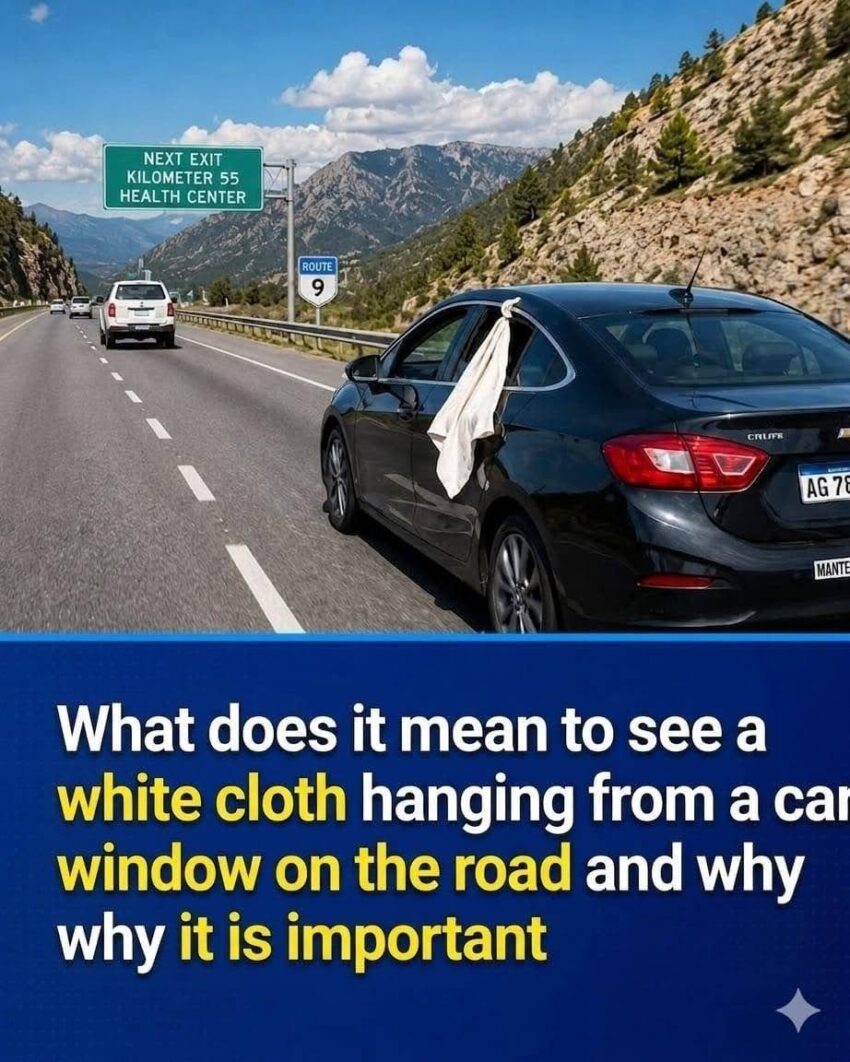
The White Cloth in Car Windows: A Little-Known Road Signal and What It Really Means
The idea of a white cloth tied to a car window, mirror, or door handle is something many people notice but do not fully understand. Online posts often describe it as a “secret emergency signal,” but the truth is more practical and less formal.
There is no universal traffic law or global standard that officially defines a white cloth as a road signal. Instead, it is an informal, local custom in some regions that drivers use to communicate a simple message: “This vehicle is temporarily out of normal operation.”
What a White Cloth Usually Means
In most real-world situations, a white cloth on a vehicle indicates one of the following:
1. The vehicle is broken down
The most common meaning is that the car has:
- Mechanical failure
- Engine trouble
- Flat battery or tire issues
- Overheating or other roadside problems
The driver may have stepped away to seek help or is waiting for assistance.
2. The vehicle is stopped temporarily (not abandoned)
In some places, a white cloth can signal:
- “I will return soon”
- “Do not tow this vehicle”
- “This car is not abandoned”
It is a way of reducing confusion when a car is left roadside.
3. The driver is in an emergency situation
Less commonly, it may suggest:
- Medical emergency
- Sudden breakdown requiring urgent help
- Waiting for roadside rescue or towing service
However, this meaning is not standardized and should not be assumed.
Is It an Official Traffic Signal?
No.
A white cloth is not part of official road safety systems used by traffic authorities in most countries, including Pakistan, the UK, and the US.
Official signals for breakdowns or danger usually include:
- Hazard warning lights (blinkers)
- Reflective warning triangles
- Emergency flares (in some regions)
- Roadside assistance signage
These are universally recognized and legally acknowledged, unlike a white cloth.
Why a White Cloth Is Used
Despite being unofficial, people still use it because:
✔ It is simple and cheap
Any piece of white fabric can be used.
✔ It is highly visible
White stands out in daylight and contrasts with most car colors.
✔ It is culturally understood in some areas
In certain regions, especially where roadside assistance is less formal, drivers recognize it as a “disabled vehicle” indicator.
Important Reality Check
The internet often exaggerates this into claims like:
- “It is a secret code used by criminals”
- “It has a universal emergency meaning”
- “It guarantees others will stop and help”
These are not accurate.
In reality:
- Many drivers do not recognize the signal at all
- It is not legally defined anywhere as a requirement
- Its meaning varies widely by location
What You Should Do If You See It
If you encounter a vehicle with a white cloth:
✔ Observe carefully
Check for:
- Hazard lights
- Smoke or visible damage
- People nearby needing help
✔ Keep safety first
Do not stop suddenly in traffic or in unsafe areas.
✔ If safe, you may assist
Only stop if:
- The road is safe
- The situation looks like genuine breakdown assistance is needed
Otherwise, you can:
- Call roadside assistance services if available
- Alert traffic authorities if the vehicle is blocking traffic
Better Modern Alternatives to a White Cloth
Today, drivers are encouraged to use proper safety signals instead:
- Hazard lights (most important)
- Reflective triangle placed behind the car
- Phone-based roadside assistance services
- Emergency apps (in some countries)
These are far more reliable and universally understood than a cloth.
The Bottom Line
A white cloth on a car window is an informal, regional signal that usually means the vehicle is disabled, stopped temporarily, or in need of attention. However, it is not an official or universally recognized road rule, and its meaning can vary depending on location.
For real safety on the road, drivers should always rely on hazard lights and proper warning devices, not informal signals that others may misinterpret.
