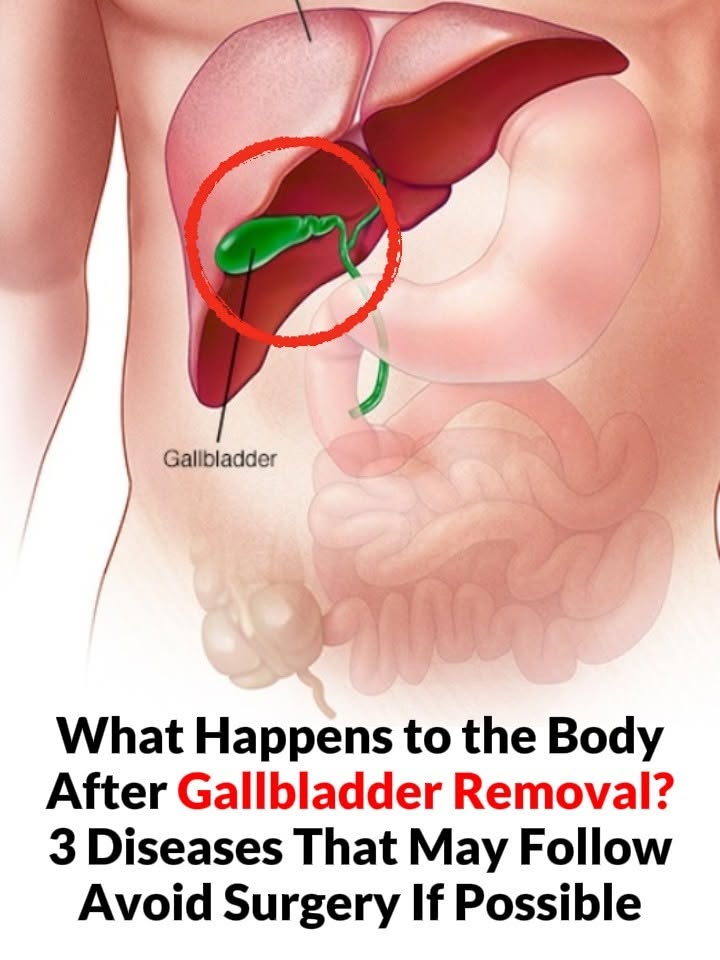
What Happens After Gallbladder Removal?
The headline “3 diseases that may follow—avoid surgery if possible” is misleading. For people with conditions such as repeated painful gallstones, gallbladder inflammation, or certain complications, gallbladder removal (cholecystectomy) is often the recommended treatment and can prevent serious health problems.
Many people live normal, healthy lives without a gallbladder.
What changes after surgery?
The gallbladder stores bile made by the liver. After it is removed:
- The liver continues to produce bile.
- Bile flows directly into the small intestine instead of being stored.
- Most people digest food normally after recovery, though some notice temporary digestive changes.
Possible problems after gallbladder removal
1. Diarrhea or loose stools
Some people have more frequent bowel movements, especially after fatty meals. This is often temporary and improves over time.
2. Indigestion or bloating
A few people experience:
- Gas
- Bloating
- Mild abdominal discomfort
Eating smaller, lower-fat meals during recovery may help.
3. Post-cholecystectomy symptoms
A small number of people continue to have abdominal pain or digestive symptoms after surgery. These symptoms can have several causes and should be evaluated by a healthcare professional.
Should you avoid surgery?
Not necessarily.
Gallbladder removal is not recommended simply because gallstones are present without symptoms in most people. However, surgery may be appropriate if you have:
- Recurrent gallstone attacks
- Gallbladder inflammation (cholecystitis)
- Gallstone-related pancreatitis
- Blockage of the bile ducts
- Other serious gallbladder complications
In these situations, delaying surgery may increase the risk of serious illness.
After surgery, these habits may help:
- Eat smaller meals at first.
- Gradually reintroduce higher-fat foods as tolerated.
- Eat plenty of fruits, vegetables, and whole grains.
- Stay physically active.
- Follow your surgeon’s recovery instructions.
Seek medical attention if you develop:
- Severe or worsening abdominal pain
- Fever or chills
- Yellowing of the skin or eyes (jaundice)
- Persistent vomiting
- Dark urine or pale stools
Gallbladder removal is one of the most common surgical procedures and is generally safe and effective when medically indicated. The decision to have surgery should be based on your symptoms, test results, and your healthcare professional’s recommendations—not on alarming online headlines.
